

Will Data Centres Become the Biggest Bottleneck in AI?

Author

Author

Veera Nagi Reddy Mekala

Director of Tech. Innovation

Will data centres become the biggest bottleneck in AI blog cover 12th Wonder guide to enterprise infrastructure scaling

Will Data Centres Become the Biggest Bottleneck in AI?

Key Takeaways

  • AI growth depends on reliable power, cooling, networking and compute capacity.
  • Infrastructure constraints can raise cloud costs and limit regional availability.
  • Advanced chips require data centres built for higher power density and heat management.
  • Efficient model selection and workload design can reduce compute demand.
  • Enterprises should evaluate scalability, latency and long-term operating costs before deployment.

AI demand is driving one of the largest expansions of computing infrastructure in recent history.

According to a Reuters report published in July 2026, Hut 8 signed a $9.8 billion lease covering 352 megawatts of AI data centre capacity at its Texas campus. The timeline illustrates the scale of investment and lead time involved in bringing major AI infrastructure online.

Businesses are deploying reasoning models, multimodal applications and AI agents across products, workflows and customer experiences. As these workloads expand, so does demand for power, cooling and compute capacity.

Data centre availability could shape how quickly AI products launch, how much they cost to operate and which companies can scale them successfully.

AI Is Becoming a Physical Infrastructure Industry

Early conversations about generative AI focused on model size, speed and output quality. Cloud platforms kept much of the supporting infrastructure out of sight.

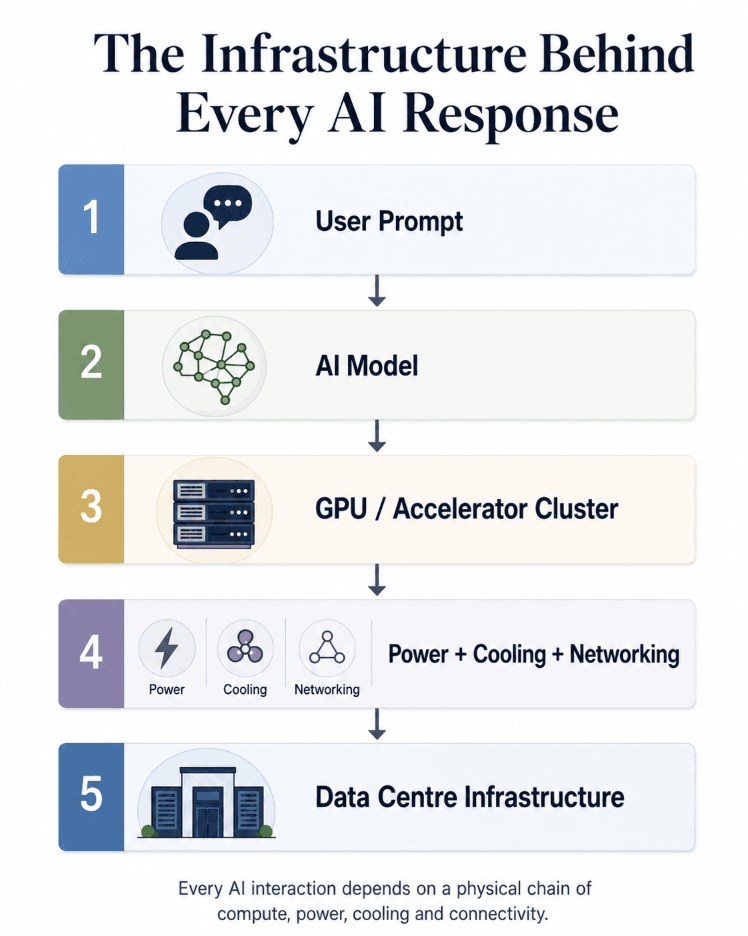
Training advanced models requires large clusters of GPUs and other AI accelerators. Serving millions of users creates continuous demand for computing power. Image generation, video tools and AI agents increase that demand further.

The International Energy Agency projects that global data centre electricity consumption could rise from about 485 terawatt-hours in 2025 to nearly 950 terawatt-hours by 2030.

AI scalability now depends on energy, hardware, cloud capacity and networking. A capable model creates commercial value when companies can operate it reliably and at a sustainable cost.
blog-Biggest-Bottleneck-in-AI-inside1-preprod.png

Power May Become the Most Immediate Constraint

Electricity is among the hardest infrastructure requirements to scale quickly.

Large AI data centres can require hundreds of megawatts of power, while some announced campuses are expected to operate at gigawatt scale. Supporting this level of demand requires major grid planning, transmission capacity and long-term energy investment.

Supporting this level of demand requires extensive preparation. Utilities must confirm that local generation, substations and transmission systems can handle the additional load. New infrastructure may need approval and construction before a facility can reach full capacity.

A data centre can sometimes be built faster than the grid infrastructure needed to power it. The IEA notes that facilities may become operational within two or three years, while wider energy infrastructure often takes longer, leaving companies waiting for adequate power after construction is largely complete.

Electricity access is becoming a critical part of compute availability. Every processor requires a suitable rack, network connection, cooling system and dependable power supply.

Businesses purchasing AI through the cloud may experience this constraint through reduced regional availability, capacity limits or higher service prices.

More Powerful Chips Need More Capable Facilities

Advanced AI chips can process larger workloads. Their operation also requires higher power density and stronger heat management within each rack.

Many older data centres were designed for traditional enterprise systems. Their electrical and cooling infrastructure may require major upgrades before supporting dense AI clusters.

Installing new accelerators can involve liquid cooling, higher-capacity power systems and redesigned rack layouts. Processor access represents one part of the total capacity requirement.

Facility readiness has therefore become part of hardware strategy. Enterprises running private data centres must assess the long-term value of upgrades and consider cloud or colocation providers for demanding AI workloads.

Cooling Capacity Will Influence AI Performance

Dense AI racks generate significant heat, reducing the effectiveness of conventional air-cooling systems. Many new data centres are adopting direct-to-chip liquid cooling and other advanced thermal technologies.

Cooling design affects hardware reliability, rack capacity and total energy consumption. According to the International Energy Agency’s 2025 Energy and AI report, cooling and other supporting infrastructure could account for around 20 percent of the net increase in global data centre electricity consumption through 2030.

Water availability can influence where data centres are built, particularly in regions facing resource constraints. Facilities that rely on water-intensive cooling may face higher operating risks, tighter permitting requirements or limits on future expansion.

For enterprises, cooling efficiency can influence cloud costs, sustainability reporting and the long-term economics of running AI workloads at scale.

Construction Timelines Could Slow AI Expansion

Data centres require long physical development cycles.

A large facility may involve land acquisition, environmental reviews, utility agreements, permits, construction and specialised equipment installation. Delays at any stage can affect the date when computing capacity becomes available.

Transformers, generators, switchgear and high-voltage equipment must be manufactured and delivered. Skilled engineers, electricians and construction teams are also required to assemble and commission each site.

Large announcements about future AI capacity should be interpreted carefully. Planned capacity may require several years before becoming operational.

Technology roadmaps often assume that computing power will expand over time. Delayed facilities can affect model training, product launches and regional expansion.

AI Economics Will Be Shaped by Infrastructure

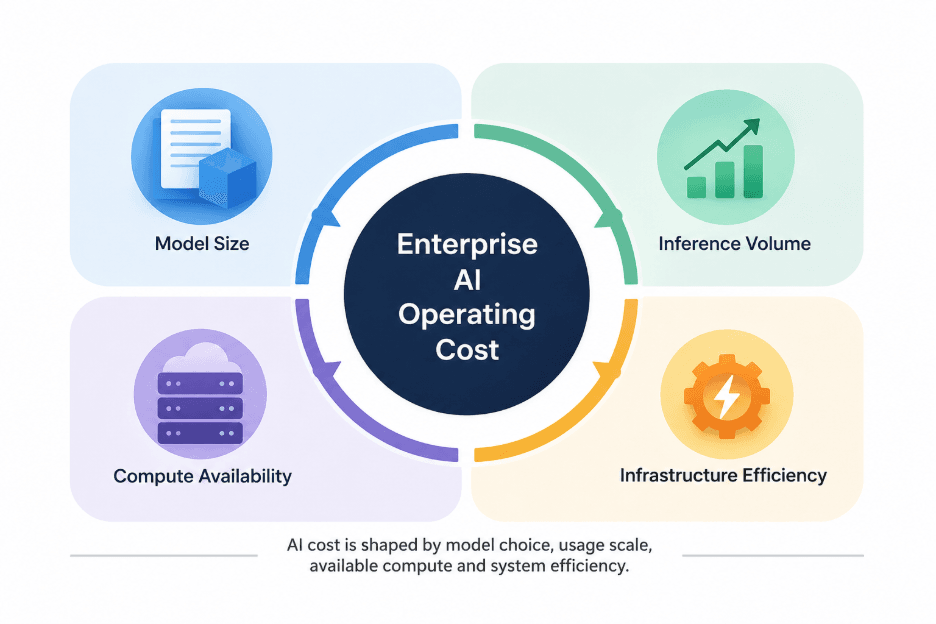
Data centres carry substantial costs across electricity, cooling, networking, maintenance and hardware replacement. Growing demand can influence cloud pricing, API fees and usage limits.

The financial impact often becomes visible after deployment. An AI tool’s operating cost can rise significantly as usage reaches thousands of employees or customers.

Inference costs continue throughout the life of an application. Every generated response, analysed document and automated action consumes computing resources.

Companies with access to affordable compute can scale faster and conduct more experiments. Enterprise AI planning should therefore account for long-term operating costs before a solution moves from pilot to production.
blog-Biggest-Bottleneck-in-AI-inside2-preprod.png

Efficiency May Matter More Than Model Size

Many business tasks can be handled by smaller specialised models. Classification, summarisation, information extraction and routine support are common examples.

Architecture choices also matter. Techniques such as retrieval-augmented generation can improve task performance by grounding responses in relevant enterprise data without relying solely on larger models.

Techniques such as model compression, quantisation, caching and intelligent routing can reduce computing requirements and operating costs. Advanced reasoning models can then be reserved for tasks where their additional capability justifies the higher compute cost.

The IEA estimates that improvements across hardware, software and infrastructure could reduce data centre electricity demand by more than 15 percent by 2035 while supporting the same level of digital services.

Efficiency has become a practical business capability that influences performance, cost and long-term deployment value. Achieving it requires careful model selection, well-designed workflows and clear visibility into inference costs.

12th Wonder helps enterprises apply these principles by designing AI systems around real workload requirements, scalable architecture and production economics.

What Enterprises Should Do Now?

Enterprises should plan for AI infrastructure constraints before moving from pilot to production.

Usage forecasts must account for scale. A tool serving 50 employees creates a different cost profile from one used by thousands of employees or customers.

Model selection should reflect task complexity, with suitable systems chosen for predictable workflows, deeper reasoning and complex outputs.

Architecture should remain flexible across models and cloud providers. This approach reduces exposure to pricing changes, regional capacity limits and service restrictions.

Teams should track cost per completed task, latency, data residency and resource use. Strong LLM evaluation and observability practices can help organisations monitor quality, reliability and operating performance as usage grows.

Infrastructure requirements should also form part of vendor evaluation. Enterprises need visibility into hosting regions, capacity guarantees, service limits and future pricing models.

Will Data Centres Become the Biggest AI Bottleneck?

Data centres could become the biggest bottleneck in AI growth, particularly in regions where grid development cannot keep pace with rising electricity demand.

The pressure will vary across markets. Regional constraints may include power shortages, construction delays, limited high-density facilities and higher cloud costs.

The IEA expects global data centre electricity demand to roughly double by 2030. Efficient architecture will become increasingly important as organisations compete for available computing capacity.

Enterprises that match models to real workload needs will be better positioned to control costs, maintain performance and scale reliably.

Conclusion

The future of AI will be shaped by the infrastructure capable of carrying its growth.

Power, cooling, compute access and deployment costs will influence how quickly enterprises can move from promising use cases to reliable systems operating at scale.

Strong AI architecture brings these decisions together. Model selection, workload design and cost visibility help organisations build systems that remain practical as usage expands.

12th Wonder helps enterprises turn that foundation into measurable value through model evaluation, scalable architecture and workflow optimisation.

AI will create lasting advantage for businesses that design for scale from the beginning.

FAQ

AI models use large clusters of specialised processors for training and inference. Networking, cooling and supporting electrical systems increase the total requirement.

Is Your AI Ready to Scale?

Evaluate model choice, infrastructure requirements and inference costs before usage expands.

Request Demo

Recent Blogs

Start with pgvector blog cover enterprise RAG vector database comparison of pgvector, Pinecone, Milvus and OpenSearch in 2026

Start with pgvector: When Enterprise RAG Needs a Dedicated Vector Database

A RAG system can have a powerful LLM and still fail because the retrieval layer brings the wrong context.

Read more...
Enterprise AI architecture showing Retrieval-Augmented Generation (RAG) versus fine-tuning for building scalable, accurate, and domain-specific LLM applications.

RAG vs Fine-Tuning: Which Approach Fits Your Enterprise Use Case?

In 2025, enterprise AI moved beyond experimentation and into real business workflows. McKinsey reported that 71% of organizations

Read more...
Illustration of enterprise AI observability showing LLM evaluation metrics, prompt monitoring, latency, hallucination detection, and model performance dashboards.
Beyond Model Accuracy: LLM Evaluation and Observability for Business AI

Organizations are moving beyond asking "Can we build it?" and increasingly asking "Can we trust it in production?

Read more...
Spatial RAG architecture connecting GIS data, spatial retrieval, and large language models (LLMs) for accurate GeoAI and enterprise spatial reasoning.

Spatial RAG: The Missing Layer Between GIS Data and LLMs

Ask an LLM which substations are inside a flood zone, and it may answer confidently without performing a spatial query.

Read more...
Agentic testing 2026 guide blog cover AI agents autonomously planning, executing and maintaining software testing workflows

Agentic Testing: The Complete 2026 Guide to Autonomous Software Testing

Traditional test automation helped teams scale quality, but modern applications are evolving faster than many automation frameworks

Read more...
What is MCP blog cover — Model Context Protocol connecting AI agents to enterprise systems through standardised integration

What Is MCP? Understanding the Model Context Protocol for Enterprise AI

AI agents are rapidly becoming part of the enterprise technology stack. Organizations are deploying engineering copilots, customer

Read more...
AI agents for enterprise GIS visual Agentic GeoAI combining LLMs, spatial reasoning and multi-agent systems in 2026

Agentic GeoAI: AI Agents Transforming Enterprise GIS Workflows (2026)

A flood warning is issued. By the time analysts collect satellite imagery, run spatial models, validate results and distribute reports,

Read more...
Frontier AI Models guide cover image

Frontier AI Models Guide: OpenAI vs Claude vs Gemini (2026)

Every major AI provider is promising to be your enterprise AI platform. Many organizations initially evaluat

Read more...
Enterprise AI agent platform comparison illustration — build vs buy decision framework for 2026 with hybrid architecture.

Build vs Buy: AI Agent Platforms Compared (2026)

Enterprise AI has evolved beyond simple chatbots into operational ecosystems capable of workflow automation, system integration, and real-time decision-making

Read more...
Claude Fable 5 illustration, Anthropic's Mythos-class AI model for autonomous workflows and enterprise use

Claude Fable 5: The Mythos-Class AI Model You Can Use in 2026

Anthropic's Claude Fable 5 is the first publicly available Mythos-class AI model, representing a significant step beyond traditional AI assistants.

Read more...
Multi-agent systems blog thumbnail — 2026 enterprise guide to multi-agent AI

Multi-Agent Systems for Business: A Practical Enterprise Guide (2026)

Enterprise AI is quietly moving away from the idea of one system doing everything. The future of enterprise AI is increasingly being shaped by coordinated intelligence

Read more...
AI agent ROI blog thumbnail — how to measure AI value before you build

AI Agent ROI: How to Measure It Before You Build

What was once considered cutting-edge technology reserved for large tech firms has now become part of everyday business operations

Read more...
Blog cover

AI Agent Security: Defending Against Prompt Injection in Enterprise AI Systems

The rate of adoption of autonomous AI agents by businesses is growing quickly. Autonomous AI agents have become commonplace, where they are being used to automate workflows, engage with customers,

Read more...
Blog cover

RAG Explained: The Complete Guide to Retrieval-Augmented Generation for Enterprise AI (2026)

Somewhere in your organization right now, an AI assistant just answered a question with complete confidence and complete inaccuracy. It cited a policy from two years ago, a product that was discontinued last quarter,

Read more...
Blog cover

EU AI Act Compliance Checklist: Everything Enterprises Need to Know Before 2027

AI governance has moved from a boardroom discussion to a legal obligation. The EU AI Act is the most comprehensive artificial intelligence policy framework enacted anywhere in the world and enforcement is already underway.

Read more...
Blog cover

Small Language Models vs LLMs: A Practical Guide to Choosing the Right AI Model for Your Business

The conversation around enterprise AI in 2026 has shifted. While large language models like GPT-4 and Claude still dominate headlines, a quieter revolution is happening at the edge.

Read more...
Blog cover

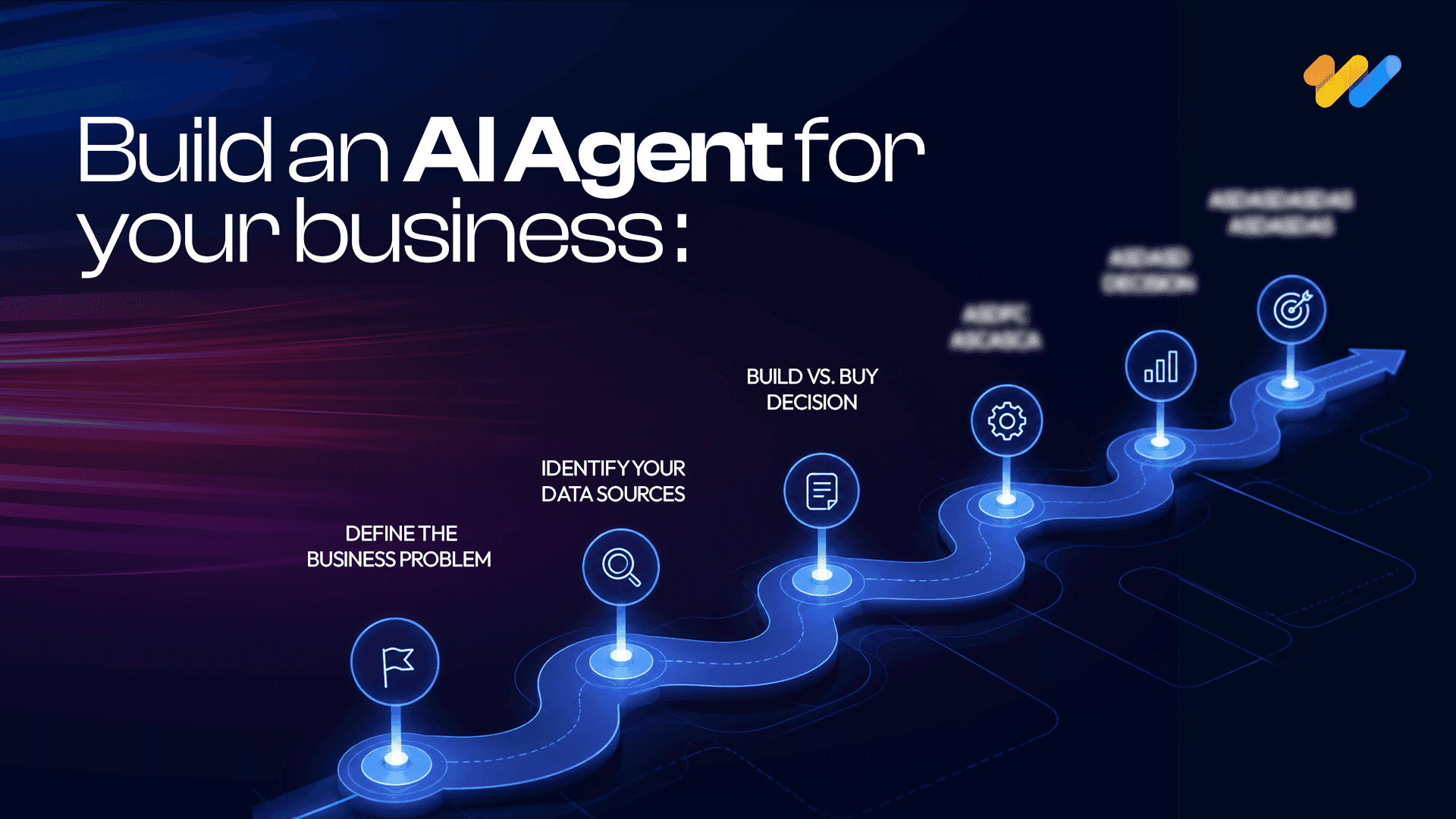
How to Build an AI Agent for Your Business: A Practical Guide (2026)

AI agents are no longer a future-facing experiment. Businesses across industries are using them to handle real workflows right now, and the

Read more...
Blog cover

AI and the Energy Crisis: How Data Centers Are Reshaping the Global Power Grid in 2026

AI data center energy consumption has become one of the defining infrastructure challenges of this decade. The numbers are no longer abstract.

Read more...
Blog cover

AI in the Supply Chain: Where Value Is Actually Created

AI adoption across supply chains is accelerating. Investment is growing, pilots are expanding, and technical capability is improving quickly.

Read more...
Blog cover

Vibe Coding in 2026: The Complete Guide to AI-Powered Development

Vibe coding is a natural-language-first approach to software development where you describe what you want in plain English and AI generates functional code for you.

Read more...
Blog cover

AI Trends in 2026: 7 Predictions That Will Reshape Every Industry

The most important AI predictions for 2026, agents, generative AI, industry transformation, governance and what's next. A practical guide for business and technology leaders.

Read more...
Blog cover

Real-Time Visibility in Logistics: Why Your Architecture Is Costing You More Than You Think

Here is a number worth pausing on: 45% of logistics organizations have real-time visibility into fewer than half their shipments.

Read more...
Blog cover

Why Field Operations Break When You Can’t See Them on a Map

Field operations rarely fail because teams are not working hard enough. They fail when leaders lose visibility into what is happening, where it is happening, and why.

Read more...
Blog cover

What Your GIS Data Actually Needs for GeoAI

We examined why many GeoAI projects fail before they even get started in the previous blog. Let's now discuss what makes GeoAI function in the real world.

Read more...
Why GeoAI projects fail blog banner — common reasons GeoAI initiatives stall before launch

Why GeoAI Projects Fail Before They Even Start

GeoAI is currently omnipresent. In order to anticipate failures, automate decision-making, and make sense of intricate networks, utilities,

Read more...
GIS drone mapping blog banner — drones powering real-time geospatial intelligence

GIS Drone Mapping: How Drones Are Powering the Next Era of Real-Time Geospatial Intelligence

GIS drone mapping is rapidly transforming how organizations collect, analyze, and act on geospatial data.

Read more...
Blog cover

Digital Twins & 3D GIS Modeling: Global Benefits, Challenges & Solutions

Digital twins and 3D GIS modeling are redefining how organizations plan, operate, and maintain physical asset

Read more...
Blog cover

GeoAI Explained: How Geospatial AI is Solving Real-World Challenges in the U.S.

GeoAI: short for Geospatial Artificial Intelligence is the convergence of geospatial data (location, maps, remote sensing, GPS, GIS systems)

Read more...
Blog cover

The ROI of Implementing a GIS Solution: A Business Case Study Approach

Relying on fragmented data and outdated mapping tools is no longer sustainable for organizations navigating complex,

Read more...
Blog cover

Building a Future-Ready Telecom Data Migration Framework: Tools, Automation, and Real-World Lessons

Telecom data migration is not just about moving data it's about ensuring scalability, security,

Read more...
Blog cover

The Telecom Data Migration Imperative: Challenges, Best Practices & Future-Ready Strategies

As telecom networks rapidly evolve from 4G to 5G and legacy OSS/BSS stacks shift

Read more...
Blog cover

Top 7 Emerging AI Trends to Watch in 2025

Pushing deeper into 2025, artificial intelligence continues to sprint from being a promising tool to

Read more...
Blog cover

Geospatial Revolution: Top 10 Industries Benefiting from GIS

Geographic Information Systems (GIS) have emerged as a powerful tool for businesses and organizations across various sectors.

Read more...
Blog cover

Empowering Smarter Cities: The Role of Geospatial Digital Twins in Urban Planning

Geographic Information Systems (GIS) have emerged as a powerful tool for businesses and organizations across various sectors.

Read more...
Blog cover

Enhancing Customer Experience with Location-Based Services Powered by GIS

Customer experience has emerged as a key differentiator for organizations across industries be it in utilities, retail or public services.

Read more...
Blog cover

Transforming Field Operations with Mobile GIS

Be it in utilities, transportation, or environmental management, field operations are complex and challenging.

Read more...
Blog cover

Emerging trends in GIS: Navigating the geospatial landscape

GIS or Geographical information systems has helped turn maps into advanced tools for problem-solving.

Read more...
Blog cover

How GIS is transforming predictive maintenance in the utility sector

The utility sector is the backbone of the modern economy providing vital services like electricity, water, and gas to people and businesses.

Read more...
Blog cover

Case study spotlight: Streamlining HFC network management with GIS for a US-based Telecom Service Provider

GIS (Geographical Information System) has been crucial to the growth of the telecom sector, providing invaluable geospatial data that benefits even

Read more...
Blog cover

GIS In Action: Real-World Examples of How It's Used

Geographic Information Systems (GIS) have become indispensable tools across a multitude of industries, revolutionizing the way we understand, analyze, and interact with spatial data.

Read more...
Blog cover

Case Study Spotlight: Revolutionizing Utility Asset Management

At 12th Wonder, we are transforming the way utility companies manage their assets. In one of our recent projects, we partnered with a leading utility

Read more...
Blog cover

The Cutting-Edge Benefits of GIS For Telecom Networks

Geographic Information Systems (GIS) are making a big impact in the telecommunications world. Think of GIS as a powerful tool that transforms heaps of data into clear, useful maps.

Read more...
Blog cover

What is Mobile GIS? Here’s what you should know.

The world of Geographic Information Systems (GIS) is changing quickly, and mobile GIS is leading the way. At 12thWonder, we’re using this exciting technology to transform how field data

Read more...
Blog cover

A mix of Introductory and Advanced Geospatial Solutions: 12W's Approach

Geospatial solutions are revolutionizing the way we understand and interact with the space around us. We are at the forefront of this transformative wave, a company that has seamlessly integrated technology

Read more...
Blog cover

The Importance of Data Interoperability in Today’s Geospatial Solutions

Have you ever wondered what makes the digital world tick seamlessly? It’s the magic of data interoperability, especially in the realm of geospatial solutions.

Read more...
Blog cover

Leading Top 10 Best Geospatial Companies

This guide highlights the top 15 GIS (Geographic Information Systems) companies leading the way with their cutting-edge solutions in mapping and spatial analysis.

Read more...
Blog cover

Getting Started in QA Test Automation: Essential Tips for Beginners

Starting on the journey of Quality Assurance (QA) test automation can be both exciting and challenging, especially for companies taking their first steps in this domain.

Read more...
Blog cover

How to Choose the Right QA Services Provider for Your Business: Including a Checklist

In today’s competitive market, software quality assurance (QA) is vital for ensuring robust, reliable, and high-performing software solutions.

Read more...
Blog cover

Solve Your Business Challenges with 12th Wonder's Tailored Digital Transformation Solutions!

Ready to elevate your business with cutting-edge digital solutions? At 12th Wonder we offer a suite of innovative software services. Our goal is to empower your workforce and lead your business towards

Read more...
Blog cover

Integrating QA Test Automation and Manual Testing: A Balanced Approach in Software Development

In software development, you can achieving the highest quality of product by using a strategic blend of both QA test automation and manual testing. While automation is offers speed and repeatability

Read more...
Blog cover

5 Ways QA Automation Can Transform Your Business

Staying ahead of the competition requires including innovative approaches to improve efficiency and quality. This is where QA automation comes into play.

Read more...
Blog cover

Dictionary of GIS Terms

Aerial Photography Mapping: The creation of maps based on the interpretation and analysis of aerial photographs, utilizing differences in vantage points and angles to construct detailed

Read more...
Blog cover

Leading Top 15 Best Software Testing & Quality Assurance Global Companies

This guide highlights the top 15 software testing companies that consistently deliver high value from small, mighty teams. It emphasizes the critical role of QA testing in ensuring software quality

Read more...
Blog cover

Maximizing Business Value: The Transformative Power of Automation in Quality Assurance Services

The integration of automation in Quality Assurance (QA) services has transformed industries by enhancing efficiency, accuracy, and cost-effectiveness.

Read more...
Blog cover

Navigating the Pitfalls of Application Development: How We Ensure a Smooth Journey

The process of application development can be both exciting and daunting. From the spark of an idea to the polished end product, there are numerous stages where errors might occur.

Read more...
Blog cover

Quality Assurance Redefined: Your Path to Success with 12thWonder

Are you ready for help with ensuring the highest quality for your products? Collaborating with 12thWonder for Quality Assurance (QA) services opens the door to a transformative experience that

Read more...
Blog cover

Streamline Your Testing Process with 12th Wonder's Test Automation Services

In this ever-evolving world of software development, where changes happen at the drop of a hat, ensuring quality, speed, and reliability is absolutely essential.

Read more...
Blog cover

7 Ways QA Services Can Reduce Costs in Software Development

In today’s fast-paced world of software development, your company faces a myriad of challenges. Balancing quality and cost-effectiveness is a perpetual struggle.

Read more...