

AI Trends in 2026: 7 Predictions That Will Reshape Every Industry
The most important AI predictions for 2026, agents, generative AI, industry transformation, governance and what's next. A practical guide for business and technology leaders.
The State of AI in 2026
By 2026, over 70% of enterprise software deployments include some form of AI not as a feature but as core infrastructure. The AI predictions that sounded speculative two years ago are now production realities. AI is handling financial audits, triaging clinical notes, routing logistics fleets and writing code that ships to millions of users.
The question for most organizations is no longer whether to adopt AI, but how fast they can do it without breaking what already works. This guide covers every significant development across the AI industry from agentic systems and generative models to governance frameworks and the future of work.
AI Agents Are Taking Over Automation
An AI agent is a system that perceives its environment, makes decisions and takes actions to complete a goal without a human guiding every step. That distinction matters enormously when comparing it to what came before.
Traditional RPA followed rules. It did exactly what you programmed, in exactly the sequence you specified and broke the moment something changed. AI agents reason, recover from exceptions and work from an objective rather than a script.
AI Agents vs. Traditional Automation vs. RPA
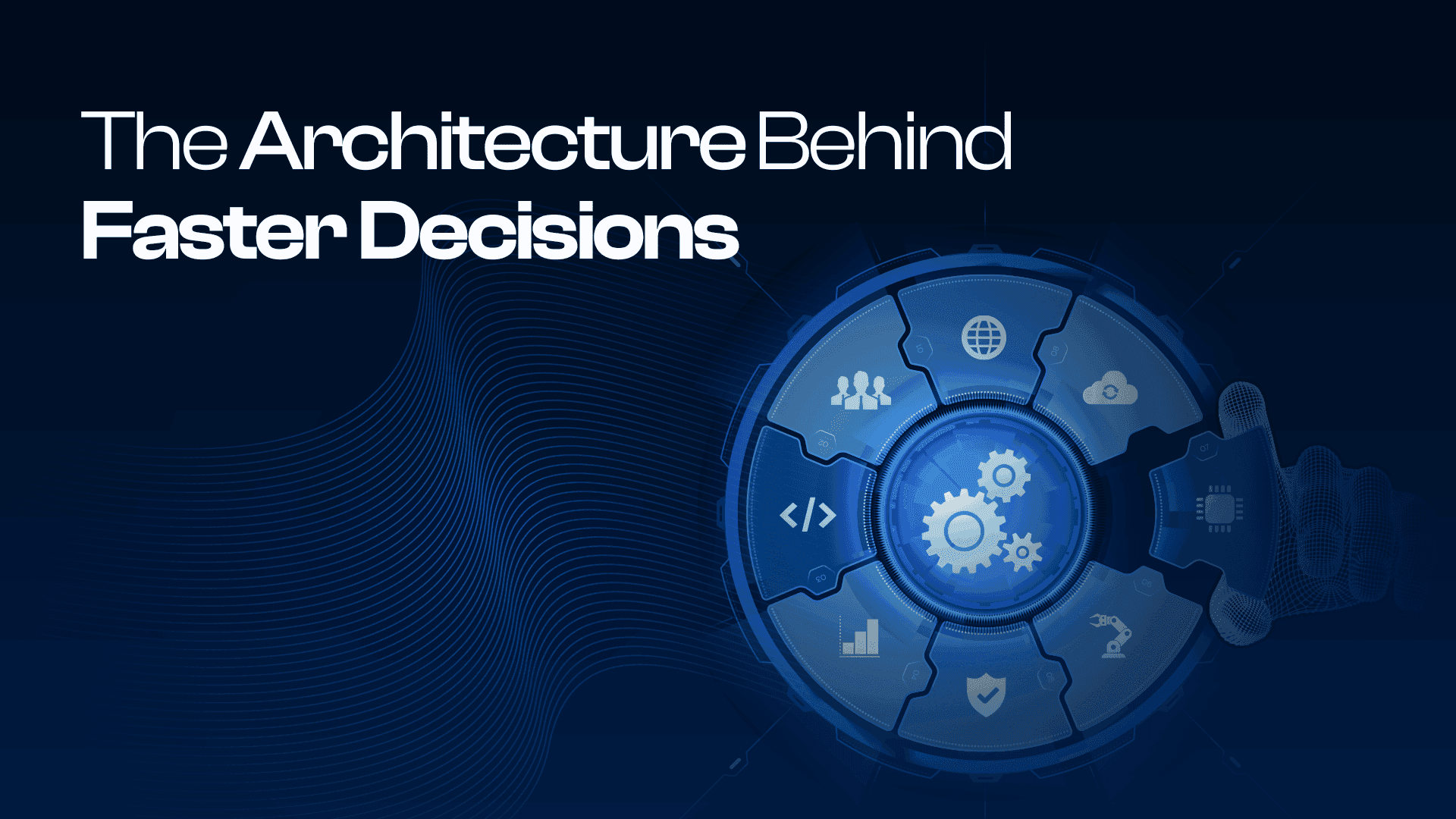
The AI agent architecture powering enterprise deployments combines a large language model as the reasoning core, tool-use capability to interact with external systems and a memory layer that retains context across steps. Leading ai agent platform options include Microsoft Copilot Studio, Salesforce Agentforce, Google Vertex AI Agent Builder, ServiceNow AI Agents and AWS Bedrock Agents.
5 AI agent tools worth knowing:
- Microsoft Copilot Studio — Custom agents on Microsoft 365 data
- Salesforce Agentforce — Sales and service automation inside CRM
- Zapier AI Agents — No-code, accessible free ai agents option for smaller teams
- Google Vertex AI Agent Builder — Developer-grade genAI agents with enterprise data grounding
- ServiceNow AI Agents — IT, HR and operations with strong governance controls
The most effective AI automation tools in 2026 are not standalone chatbots. They are integrated into existing systems, operate within a defined scope and include human oversight where it is needed.
Generative AI and Emerging Technologies
The generative AI conversation has moved well past text. In 2026, generative AI creative tools operate across code, image, audio, video and spatial data as well. Multimodal models can photograph broken infrastructure and return a maintenance recommendation. They can generate entire codebases from a written specification, then write the tests.
Gen AI: 2024 vs. 2026
Cloud computing trends have shifted inference from purely centralized to a hybrid model, heavy reasoning in the cloud, latency-sensitive decisions at the edge. For organizations running AI in field operations or mobile environments, this architectural shift is significant. Latest trends in software development show AI-assisted teams shipping defined features 30–50% faster when the tooling is properly integrated into the workflow.
How AI Is Transforming Finance, Healthcare and Jobs
Finance
AI for financial services is now the operating standard leaving behind the previous notion of competitive advantage. AI in banking, fraud detection models evaluate hundreds of signals per transaction in near real-time, adapting to new attack patterns without manual rule updates. Credit decisioning is expanding access to credit through broader signal sets, though explainability requirements mean that black-box models still need interpretability layers to satisfy regulators in the AI finance industry.
Compliance automation is where most organizations are seeing the clearest ROI, ingesting, classifying and reporting transactions against regulatory frameworks with far less manual overhead.
Healthcare
Ambient clinical documentation, AI that listens to a patient encounter and writes the clinical note has become standard in large hospital systems. Radiology AI tools are now FDA-cleared for dozens of use cases. Predictive models flagging high-risk patients before they deteriorate are reducing readmission rates across health systems that have deployed them.
AI supports this work by handling large-scale pattern recognition across thousands of patients, something that is difficult for humans to sustain consistently on their own.
Jobs and the Workforce
The “AI shall take over the world” narrative sells headlines. The reality is more useful. AI is displacing specific task categories: high-volume, low-variance information processing and not entire roles. Jobs requiring judgment, contextual reasoning and stakeholder management are being augmented and deifintely not replaced.
The World Economic Forum projects AI will displace roughly 85 million jobs globally by 2027 while creating 97 million new ones. How will AI change the world of work comes down to how well organizations manage the transition. The skills that matter: AI literacy, workflow design and the ability to evaluate AI outputs critically. These are becoming table stakes in knowledge work, much like spreadsheet literacy did in the 1990s.
AI for Business: Strategy, Implementation and ROI
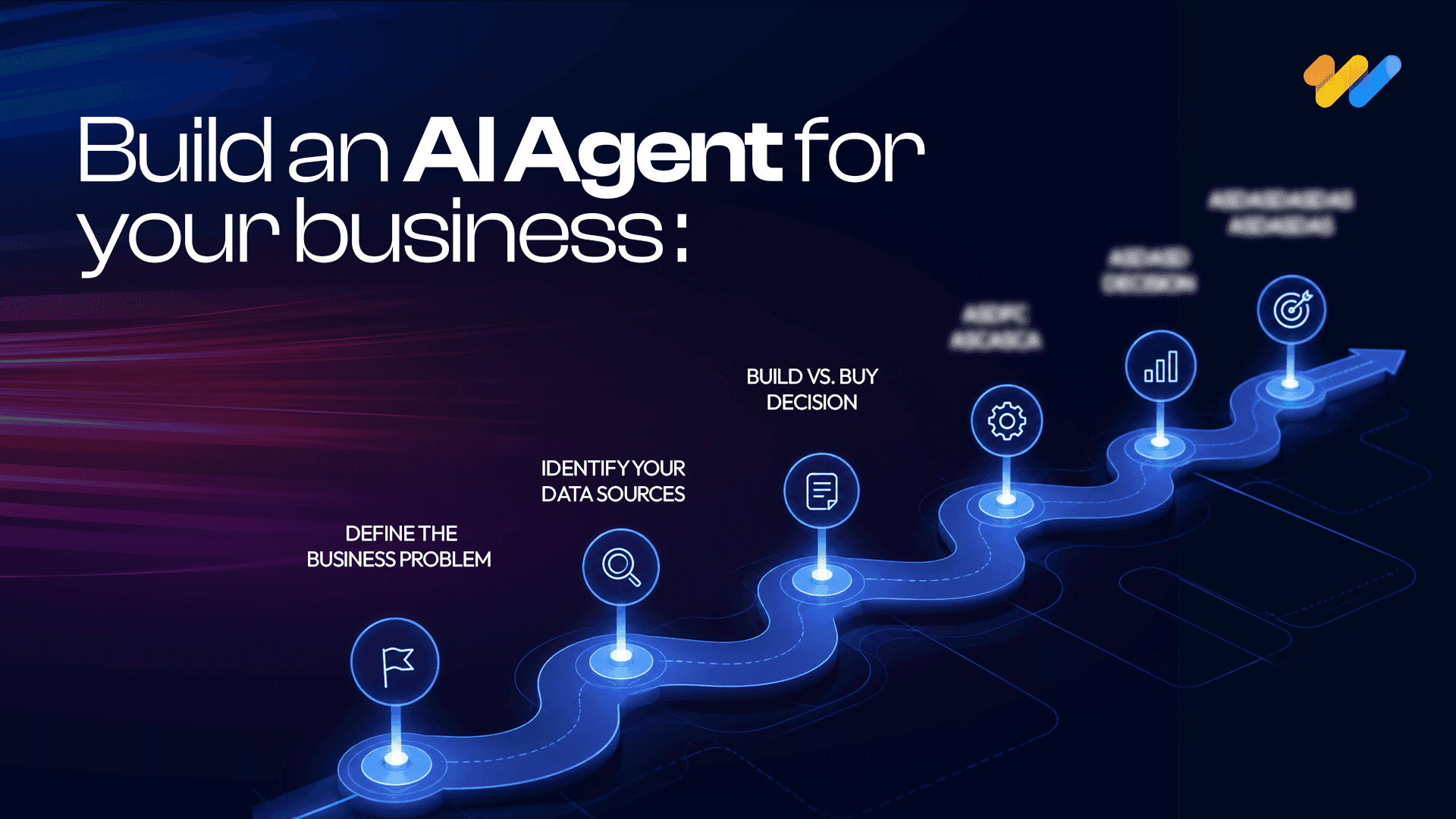
Most organizations that have struggled with AI adoption started with technology and tried to find a use case, rather than starting with the problem. A practical AI strategy framework for 2026:
- Identify high-value, AI-addressable problems — high volume, data-rich with clear success criteria
- Run an AI readiness assessment — evaluate data quality, integration architecture and governance posture before committing budget
- Build or buy with integration in mind — generative AI for enterprise is available through every major cloud provider; custom builds are warranted only when the domain is specialized or regulatory requirements demand it
- Define ROI metrics before deployment — cycle time, error rate, cost per transaction; measure against a baseline
- Govern, monitor, and iterate — deployed models drift; build a monitoring cadence into your corporate AI strategy from day one
Quick AI readiness checklist: Clean, accessible data for your use case? Defined ownership of AI outputs? A process for handling errors? A baseline metric? Executive sponsorship beyond the pilot?
Artificial intelligence in business is a capability that grows over time when it is built into how decisions are made and how systems are measured.
AI Governance, Ethics and Regulation
The EU AI Act is the most significant piece of ai governance policy enacted to date. High-risk AI systems used in employment, credit, healthcare and critical infrastructure are subject to conformity assessments, transparency requirements and human oversight mandates. For any organization operating in EU markets, compliance is not optional.
In the US, AI policy has developed through executive orders and agency guidance rather than comprehensive legislation. The NIST AI Risk Management Framework is the de facto voluntary standard, covering governance, risk, transparency and accountability.
The practical starting point for organizations building governance capability is three things: a model registry tracking what is deployed and where, a bias and fairness testing protocol for high-stakes decisions and a clear human escalation path for edge cases. These are AI governance trends moving from policy to enforced requirement and the organizations treating them as infrastructure today will have a compliance advantage in the coming years.
What's Next: 2027, Near future and Beyond
Five specific AI predictions worth quoting:
- By 2027, 50% of enterprise production code will have been generated or substantially modified by AI. The developer productivity data from 2025–2026 makes this trajectory clear.
- Agentic workflows will handle end-to-end business processes without human touchpoints in at least 30% of Fortune 500 companies. The first wave of fully autonomous operational agents is already in deployment.
- Multimodal AI will replace scheduled manual surveys in physical infrastructure inspection. Utilities, transport authorities and defense agencies are in late-stage pilots. The economics will have shifted decisively within a few years.
- AI governance will become an auditable compliance function Regulatory pressure will require organizations to demonstrate governance, not just declare it.
- The AI skills gap will be the primary constraint on how will ai continue to grow in 10 years Not compute, not data, not regulation. Organizations investing in AI literacy across their workforce now will compound that advantage for a decade.
The evolution of AI in business is about how work is distributed across systems and people. AI takes on large-scale execution, while human judgment focuses on system design, oversight and strategic direction.
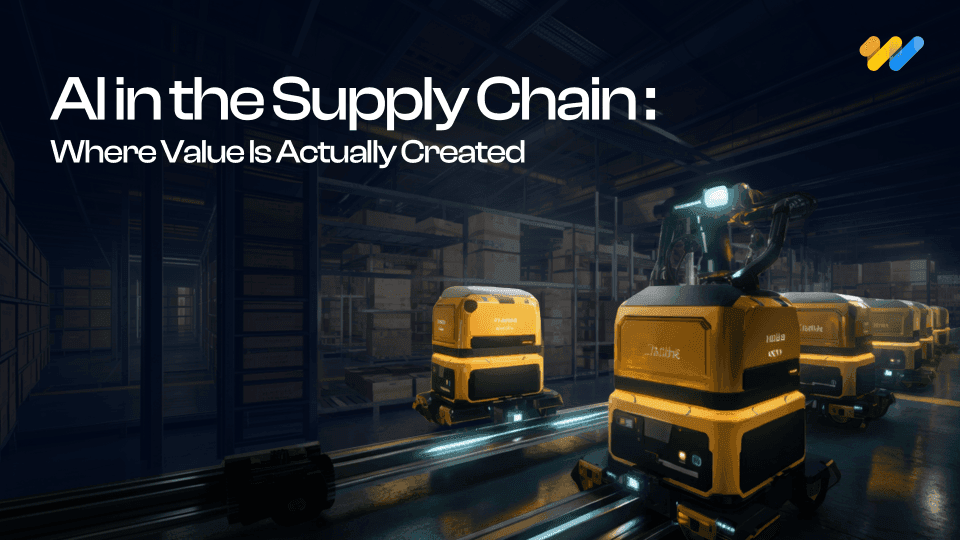
Real-Time AI Visibility in Logistics
AI agents and data-driven systems enabling faster routing, monitoring, and execution.