

Vibe Coding in 2026: The Complete Guide to AI-Powered Development
Vibe coding is a natural-language-first approach to software development where you describe what you want in plain English and AI generates functional code for you. If that sounds like the future, it is already the present. In 2026, 72% of developers use AI coding tools daily and 41% of all global code is now AI-generated. Whether you are a seasoned engineer or someone just getting started, vibe coding has changed the way software gets built.
This guide covers what vibe coding is, which tools are leading the space, where the security risks hide and how QA teams can keep up.
What Is Vibe Coding?
Vibe coding was coined by Andrej Karpathy in February 2025 in a post that racked up over 4.5 million views on X. His idea was simple: instead of writing every line of code by hand, you describe your intent in plain language and let the AI handle the implementation. You stay focused on what you want to build more than the syntax required to build it.
It is worth separating vibe coding from what came before it. GitHub Copilot introduced autocomplete for code. That was useful, but it still required you to know what you were writing. Vibe coding goes further. You are not completing sentences, you are having a conversation. You describe a feature, the AI generates the full implementation and you review and iterate from there.
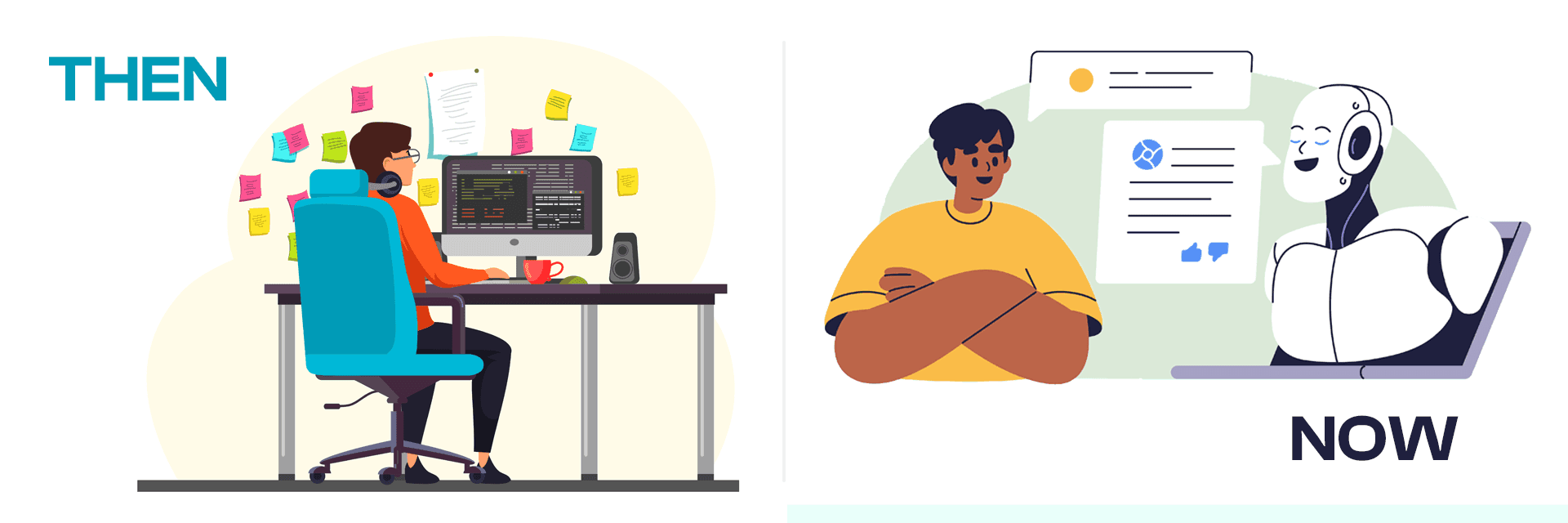
The basic workflow looks like this:
- Describe your intent in plain English
- AI generates working code
- You review the output
- You iterate based on what needs to change
This loop can produce in hours what used to take days. That productivity gain is real and it is why adoption has grown so fast.
The Best Vibe Coding Tools in 2026
The vibe coding tools market has matured quickly. Here is a comparison of the top platforms developers are using right now.
| Tool | Best For | Pricing | IDE / Platform |
|---|---|---|---|
| GitHub Copilot | Enterprise teams, broad language support | $10–$19/mo | VS Code, JetBrains, Neovim |
| Cursor | Full codebase context and refactoring | $20/mo | Standalone (VS Code fork) |
| Claude Code | Complex reasoning, long-context tasks | Usage-based | Terminal / CLI |
| Replit Agent | Beginners, rapid prototyping | Free + paid tiers | Browser-based |
| Bolt.new | Full-stack app generation from a prompt | Free + paid tiers | Browser-based |
| Lovable | Non-technical founders building MVPs | Subscription | Browser-based |
| Windsurf | Agentic coding with multi-file awareness | Free + paid tiers | Standalone |
GitHub Copilot still holds roughly 42% market share but Cursor has grown to around 18% and continues to gain ground among professional developers who want deeper codebase integration. Lovable hit $300 million ARR by January 2026, which tells you how much demand exists outside the traditional developer audience.
If you are picking a tool, the right choice depends on your context. Copilot fits well into existing enterprise workflows. Cursor rewards developers who want to stay in a familiar VS Code environment with more power. Replit and Bolt.new are the fastest entry points if you want to go from idea to working prototype in an afternoon.
The Security Problem Nobody Is Talking About Loudly Enough
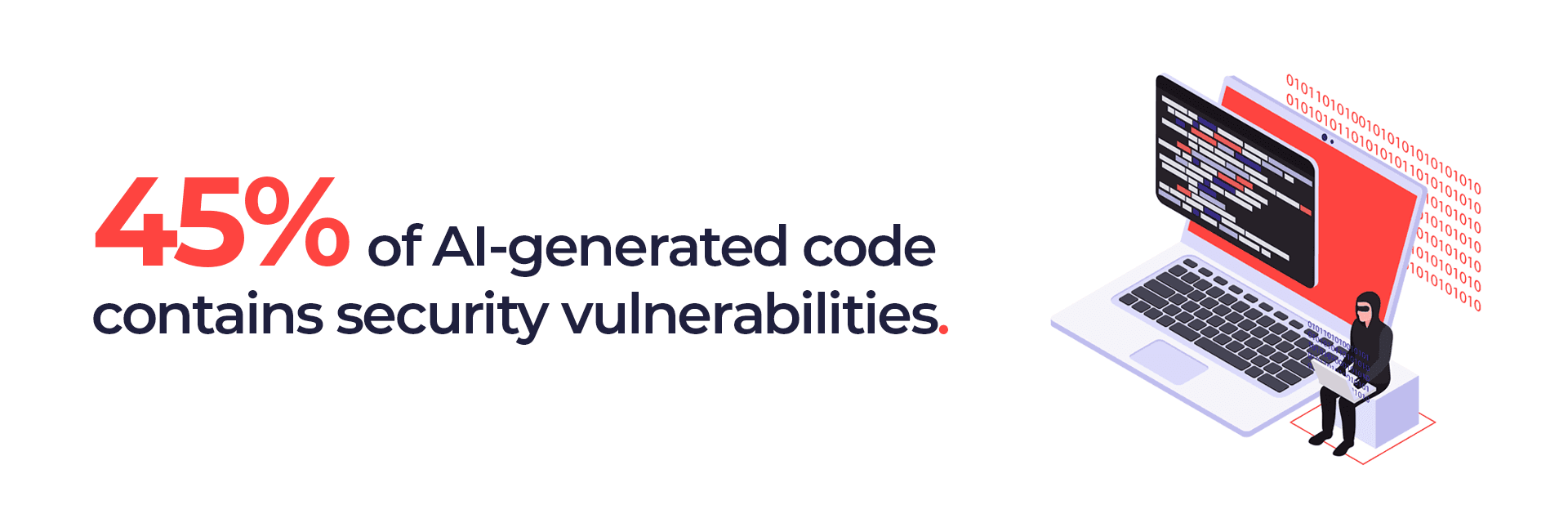
Here is the statistic that should be on every engineering leader's radar: 45% of AI-generated code contains security vulnerabilities, according to Veracode's 2025 research. A separate analysis from CodeRabbit found that AI-generated pull requests produce 1.7 times more issues than those written by humans.
These numbers are a reason to use AI coding tools carefully.
The most common vulnerability types showing up in AI-generated code include:
Cross-site scripting (XSS): AI models often generate output rendering logic without properly encoding user input, leaving the door open for script injection attacks.
Hardcoded secrets: API keys, database credentials and tokens get baked directly into source files. AI tools sometimes do this because it is the fastest path to a working demo and developers do not always catch it before it reaches version control.
Improper input validation: AI-generated form handlers and API endpoints frequently skip the sanitization logic that prevents SQL injection and other input-based attacks.
The deeper problem is what might be called the invisible decision surface. When an AI generates a feature for you, it is writing functions alongwith making architectural decisions. It is choosing how authentication works, how secrets are managed and how user input gets handled. Those choices happen silently, without a design review and without any documentation of the rationale behind them. A developer reading that code a week later has no way of knowing what the AI considered or ruled out.
This behavior comes from how vibe coding operates, where speed can lead to blind spots.
QA Framework for Vibe-Coded Applications
Speed without structure is a liability. The teams getting the most out of vibe coding in 2026 are the ones that have built a review process around it.
Here is a five-step framework that works.
Step 1: Automated security scanning in CI/CD
Every pull request containing AI-generated code should run through static analysis before it touches a review queue. Tools like Semgrep, Snyk, and SonarQube can catch the most common vulnerability patterns automatically. This is not optional. It is the foundation.
Step 2: Code review protocols specific to AI output
Reviewing AI-generated code requires a different mindset than reviewing human-written code. Reviewers need to look past whether the code works and ask whether the decisions inside it are sound. That means checking authentication flows, data handling logic and third-party API integrations with extra scrutiny, even when the surface-level output looks clean.
Step 3: Threat modeling for AI-built features
Before any AI-generated feature ships, run a lightweight threat modeling exercise. Ask what data the feature touches, who can access it and what happens if the inputs are malicious. This does not need to be a formal multi-day process. Even a 30-minute conversation with the right people surfaces issues that automated scans miss.
Step 4: Testing strategies for non-deterministic outputs
AI-generated code can behave differently based on how it was prompted. Your test suite needs to account for edge cases that a human developer might have explicitly thought through but the AI may have skipped. Property-based testing and fuzzing are particularly useful here because they probe the boundaries of what the code can handle.
Step 5: Human-in-the-loop checkpoints for high-risk logic
Some logic should never ship without a human sign-off. Payment flows, access control and data deletion are obvious examples. Set a policy that any code touching these areas requires a senior reviewer to explicitly approve it, regardless of how clean the AI output looks.
This framework is about building the muscle memory that lets teams move fast without accumulating any security debt.
Where Vibe Coding Is Headed
IBM's research points to the next stage of this evolution, which they describe as an "Objective-Validation Protocol" model. Instead of prompting an AI to write code, developers will define goals and success criteria. Autonomous agents will execute the work and pause for human approval at specific checkpoints before proceeding.
This is already taking shape in agentic runtimes like those being built into Cursor and Claude Code. Policy-driven schemas will allow teams to define what the AI is and is not allowed to do, creating guardrails that match organizational risk tolerance.
What does this mean for developers working today?
Three things are becoming increasingly important to stay ahead:
Prompt engineering for code is a real skill.
The quality of what AI produces depends heavily on how clearly you can describe what you need. Developers who can write precise, context-rich prompts will consistently get better outputs than those who treat AI as a magic box.
Security literacy is non-negotiable.
Vibe coding does not remove the need to understand security. It makes that understanding more important, because you are now responsible for reviewing decisions you did not consciously make.
QA is moving earlier in the process.
The teams that will have the least friction in 2027 going forwards, are the ones building review checkpoints into the generation workflow instead of bolting them on at the end.
Looking further out, the realistic prediction is that by 2027, AI-generated code will account for more than 60% of new software shipped globally. The developers who thrive will not be the ones who resist that shift. They will be the ones who know how to direct it, review it, and secure it.
Vibe coding works best when teams apply discipline alongside speed.
Accelerate Development with AI-Driven Workflows
Build software faster by describing your intent while AI handles implementation and iteration.