
Why Enterprise AI Needs More Than a Powerful Model

Author

Author

Veera Nagi Reddy Mekala

Director of Tech. Innovation

Why Enterprise AI Needs More Than a Powerful Model

Why Enterprise AI Needs More Than a Powerful Model

Key Takeaways

  • Enterprise AI works with the knowledge, rules and context your organisation operates on.
  • Foundation models cannot automatically understand private systems, policies or organisational decisions.
  • Context engineering connects AI with trusted data, tools, permissions and relevant knowledge.
  • RAG grounds responses, while access controls and citations support governance and traceability.
  • Choose the model after defining the workflow, data, tools and controls it needs to operate reliably.

A powerful AI model can write a polished answer in seconds. Ask it about your pricing rules, internal systems or approval process, and it may produce an authoritative answer without having the information needed to make that answer correct.

The model may understand the industry. It does not automatically understand your business.

It has not attended your architecture reviews. It does not know why an application was retired, which customer records are restricted or when a manager must approve an action. It cannot see the decisions, history and rationale scattered across internal documents, service tickets, databases and conversations unless that information is made available to it.

For enterprise applications, model intelligence is only one part of the system. Reliable performance also depends on what the model can retrieve, what it is permitted to access, how current that information is and whether users can verify the answer.

For enterprise applications, model intelligence is only one part of the system. Reliable performance also depends on what the model can retrieve, what it is permitted to access, how current that information is and whether users can verify the answer.

What Does Enterprise AI Context Mean?

Enterprise AI context is the organisation-specific knowledge an AI system needs to work reliably within the business.

It can include internal policies, product definitions, customer records, API documentation, security requirements, compliance rules, standard operating procedures and architectural decisions.

Enterprise AI context also includes institutional knowledge that may not be captured clearly in documents. A team may avoid a popular framework because it previously caused performance issues. A support request may require escalation for a particular customer segment. A data field may carry a historical meaning that is not obvious from its label. Certain actions may also be restricted by region, role or regulatory requirement.

These details shape everyday business decisions, yet general-purpose AI models cannot understand them without the right business context.

A strong enterprise context layer makes this knowledge usable by connecting company data, permissions and operational rules. It gives AI systems the information needed to answer questions accurately, recommend appropriate actions and operate within defined organisational boundaries.
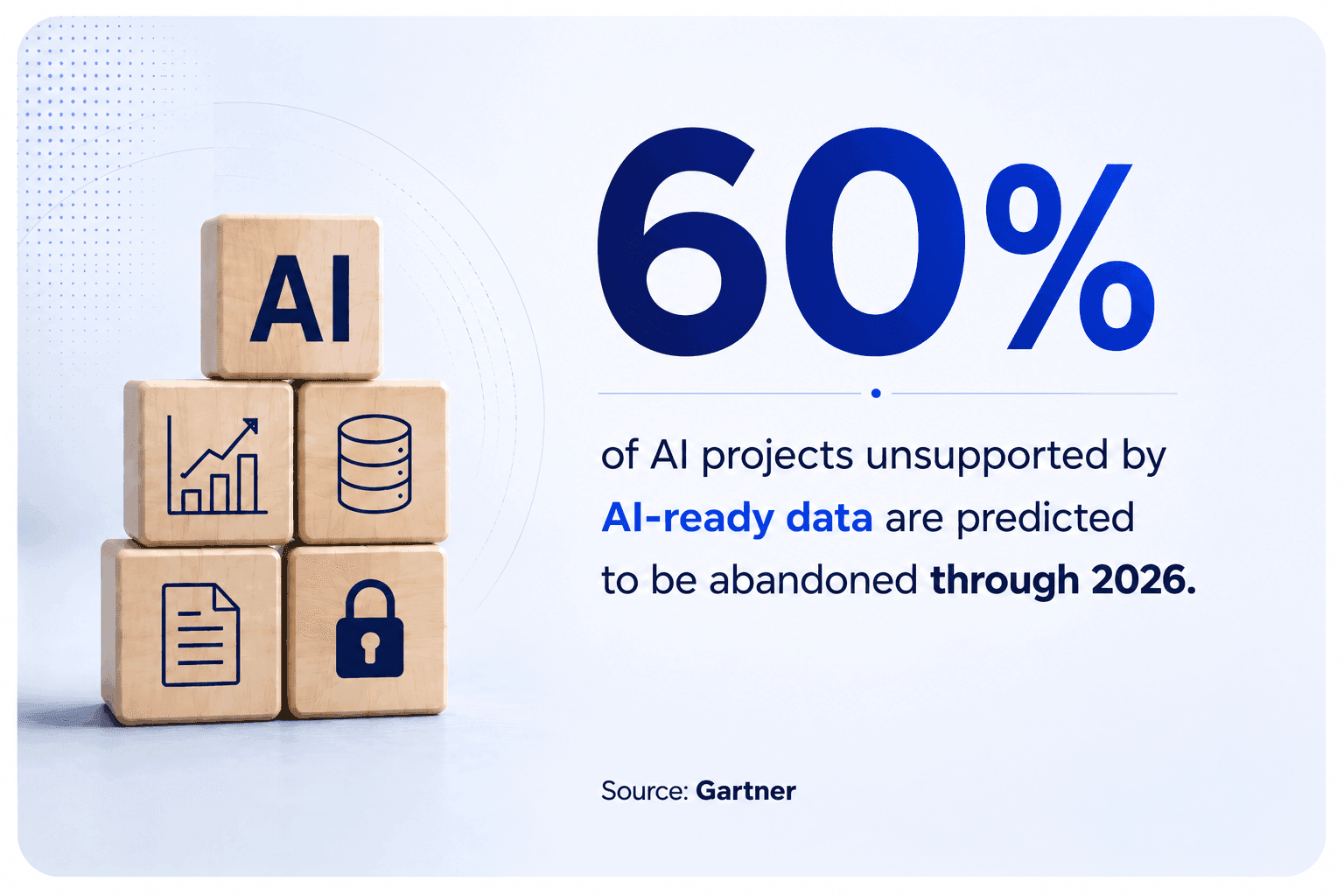
blog-why-enterprise-ai-needs-inside1-preprod.png

Why Better Models Still Fail Without Enterprise Context

Model upgrades can improve reasoning, language quality, coding and instruction following. They cannot access private business knowledge unless that information is included in training data or connected at runtime. A more capable model may therefore produce a polished answer based on incomplete context, making the response appear more reliable than it is.

Consider an employee asking, “Can this customer receive a refund after 45 days?” The model may understand common return practices, but the correct answer depends on the company’s refund policy, purchase region and approval requirements.

Without enterprise context, AI systems may recommend outdated processes, violate internal security or compliance policies and provide inconsistent answers. Weak traceability also makes responses difficult to verify when citations, source records or decision history are unavailable.

The risk increases when AI agents can update records, approve requests or trigger workflows. Missing context may cause an agent to select the wrong tool, use incorrect data or act outside its authorised scope.

Context Engineering and the Enterprise Context Layer

Context engineering supplies an AI system with the information, tools, instructions, memory and permissions required for a specific task. Prompt engineering focuses heavily on instructions. Context engineering addresses the broader set of information, tools, memory and controls an AI system needs to complete a task.

The enterprise context layer supports this process by connecting AI applications with trusted knowledge, business systems and operational data. It discovers relevant information across databases, documents and enterprise applications while defining business terms and relationships for accurate interpretation.

For example, in a customer support AI assistant, the context layer can retrieve a customer’s recent orders from a CRM system, relevant product documentation from a knowledge base and past support tickets. The assistant can then use those sources together instead of asking the employee to search three systems manually.

Retrieval methods such as keyword search, vector search and hybrid search identify the most relevant content. Governance applies permissions and policy controls, while traceability provides citations, logs and data lineage.

How RAG Grounds Enterprise AI

Retrieval-augmented generation, or RAG, connects a language model with trusted external knowledge. When a user submits a query, the system searches approved enterprise sources, retrieves relevant information and provides it to the model to generate a grounded response.

In a typical enterprise RAG workflow, the system interprets the query, retrieves authorised information, passes that context to the model and applies whatever validation or governance controls the workflow requires.

RAG can keep responses closer to current enterprise knowledge because source content can be updated without retraining the underlying model. It also supports citations, allowing users to verify the sources behind an answer.

However, production RAG requires careful engineering. Retrieval quality depends on document preparation, metadata, chunking, embeddings, search configuration and ranking.

Trusted retrieval, permission-aware access and citations improve accuracy, traceability and auditability while supporting enterprise AI governance.

From AI Pilot to Production: Building a Strong Context Strategy

Enterprise AI pilots often use limited datasets, small user groups and carefully selected questions, which can make the system appear more reliable than it will be in production.

Real-world environments introduce conflicting documents, outdated records, incomplete user queries, changing business rules and different access permissions. A production-ready AI system must identify authoritative sources, recognise missing or conflicting information and escalate high-risk decisions to human reviewers.

A strong enterprise AI context strategy should begin with one clearly defined workflow that has an accountable owner, measurable value and manageable risk. Teams should identify the knowledge required for that workflow, record each source’s authority, sensitivity and update frequency, then remove duplicate or outdated content.

Retrieval should respect user identity, role, geography and data classification. Responses should include citations and indicate when evidence is insufficient. Organisations must also define what AI agents can read, recommend and execute, with approval controls for high-impact actions.

Finally, teams should monitor retrieval quality, answer accuracy, user corrections and action outcomes. Clear knowledge ownership helps keep enterprise context current as systems, policies and operational requirements change.

Choosing Models After Defining Context Requirements

Model selection becomes more practical once the workflow and context architecture are clearly defined.

Evaluate models against the requirements of the workflow: task complexity, tool-use reliability, security, deployment constraints, latency, cost and performance on realistic enterprise test cases.

Some workflows require the advanced reasoning capabilities of a frontier model. Others can run efficiently on smaller models because reliable retrieval provides the knowledge needed to complete the task.

The best enterprise AI model is the one that performs consistently within the organisation’s complete system. Public benchmarks cannot fully measure how well a model will work with company data, business rules, tools and operational constraints.

FAQ

Enterprise AI context is the organisation-specific information an AI system needs to complete a task accurately. It includes internal data, policies, definitions, permissions, system relationships and historical decisions.

Build Enterprise AI That Understands Your Business

Connect AI with the right enterprise context so it can move from impressive answers to reliable execution.

Talk to an Expert

Recent Blogs

EU AI Act compliance calendar blog cover enterprise deadlines from prohibited practices to GPAI, transparency and high-risk AI

The EU AI Act Compliance Calendar for Enterprise AI Teams

On August 2, 2026, the EU AI Act reached one of the most important dates in its implementation calendar.

Read more...
Utility OT security and IT/OT convergence with cloud, AI and GIS connectivity

Utility OT Security Is Changing as Cloud Connectivity Grows

A substation does not need to be directly exposed to the internet to become part of a cyber risk chain.

Read more...
AI-ready data explained: the structure, semantics, metadata and governance agents need from your data layer before autonomous workflows can work reliably.

AI-Ready Data: What Agents Need from Your Data Layer

An employee asks an AI agent to identify delayed customer orders, determine the reasons and notify the relevant account managers.

Read more...
Claude Opus 5 vs Claude Fable 5 comparison of token pricing, benchmark performance and enterprise deployment fit

Claude Opus 5 vs Fable 5: Pricing, Performance and Enterprise Comparison

Fable 5 is built for workloads where sustained reasoning, longer task duration and deeper autonomy can materially affect the outcome.

Read more...
AI ROI measurement framework showing three units: workflow improvement, business outcomes and organisational capacity

Beyond Time Saved: How to Measure AI ROI

An AI assistant reviews a 60-page supplier contract in five minutes instead of an hour. The dashboard records 55 minutes saved

Read more...
Agentic AI production readiness checklist covering reliability, security, observability, cost, governance and rollback controls

The Agentic AI Production Readiness Checklist: 21 Checks Before Deployment

A procurement AI agent receives an incomplete supplier record. Instead of stopping, it fills in the missing delivery terms, retries the same tool

Read more...
Will data centres become the biggest bottleneck in AI blog cover 12th Wonder guide to enterprise infrastructure scaling

Will Data Centres Become the Biggest Bottleneck in AI?

AI demand is driving one of the largest expansions of computing infrastructure in recent history. According to a Reuters report published in July 2026, Hut 8 signed a $9.8 billion lease

Read more...
Start with pgvector blog cover enterprise RAG vector database comparison of pgvector, Pinecone, Milvus and OpenSearch in 2026

Start with pgvector: When Enterprise RAG Needs a Dedicated Vector Database

A RAG system can have a powerful LLM and still fail because the retrieval layer brings the wrong context.

Read more...
Enterprise AI architecture showing Retrieval-Augmented Generation (RAG) versus fine-tuning for building scalable, accurate, and domain-specific LLM applications.

RAG vs Fine-Tuning: Which Approach Fits Your Enterprise Use Case?

In 2025, enterprise AI moved beyond experimentation and into real business workflows. McKinsey reported that 71% of organizations

Read more...
Illustration of enterprise AI observability showing LLM evaluation metrics, prompt monitoring, latency, hallucination detection, and model performance dashboards.

Beyond Model Accuracy: LLM Evaluation and Observability for Business AI

Organizations are moving beyond asking "Can we build it?" and increasingly asking "Can we trust it in production?

Read more...
Spatial RAG architecture connecting GIS data, spatial retrieval, and large language models (LLMs) for accurate GeoAI and enterprise spatial reasoning.

Spatial RAG: The Missing Layer Between GIS Data and LLMs

Ask an LLM which substations are inside a flood zone, and it may answer confidently without performing a spatial query.

Read more...
Agentic testing 2026 guide blog cover AI agents autonomously planning, executing and maintaining software testing workflows

Agentic Testing: The Complete 2026 Guide to Autonomous Software Testing

Traditional test automation helped teams scale quality, but modern applications are evolving faster than many automation frameworks

Read more...
What is MCP blog cover — Model Context Protocol connecting AI agents to enterprise systems through standardised integration

What Is MCP? Understanding the Model Context Protocol for Enterprise AI

AI agents are rapidly becoming part of the enterprise technology stack. Organizations are deploying engineering copilots, customer

Read more...
AI agents for enterprise GIS visual Agentic GeoAI combining LLMs, spatial reasoning and multi-agent systems in 2026

Agentic GeoAI: AI Agents Transforming Enterprise GIS Workflows (2026)

A flood warning is issued. By the time analysts collect satellite imagery, run spatial models, validate results and distribute reports,

Read more...
Frontier AI Models guide cover image

Frontier AI Models Guide: OpenAI vs Claude vs Gemini (2026)

Every major AI provider is promising to be your enterprise AI platform. Many organizations initially evaluat

Read more...
Enterprise AI agent platform comparison illustration — build vs buy decision framework for 2026 with hybrid architecture.

Build vs Buy: AI Agent Platforms Compared (2026)

Enterprise AI has evolved beyond simple chatbots into operational ecosystems capable of workflow automation, system integration, and real-time decision-making

Read more...
Claude Fable 5 illustration, Anthropic's Mythos-class AI model for autonomous workflows and enterprise use

Claude Fable 5: The Mythos-Class AI Model You Can Use in 2026

Anthropic's Claude Fable 5 is the first publicly available Mythos-class AI model, representing a significant step beyond traditional AI assistants.

Read more...
Multi-agent systems blog thumbnail — 2026 enterprise guide to multi-agent AI

Multi-Agent Systems for Business: A Practical Enterprise Guide (2026)

Enterprise AI is quietly moving away from the idea of one system doing everything. The future of enterprise AI is increasingly being shaped by coordinated intelligence

Read more...
AI agent ROI blog thumbnail — how to measure AI value before you build

AI Agent ROI: How to Measure It Before You Build

What was once considered cutting-edge technology reserved for large tech firms has now become part of everyday business operations

Read more...
Blog cover

AI Agent Security: Defending Against Prompt Injection in Enterprise AI Systems

The rate of adoption of autonomous AI agents by businesses is growing quickly. Autonomous AI agents have become commonplace, where they are being used to automate workflows, engage with customers,

Read more...
Blog cover

RAG Explained: The Complete Guide to Retrieval-Augmented Generation for Enterprise AI (2026)

Somewhere in your organization right now, an AI assistant just answered a question with complete confidence and complete inaccuracy. It cited a policy from two years ago, a product that was discontinued last quarter,

Read more...
Blog cover

EU AI Act Compliance Checklist: Everything Enterprises Need to Know Before 2027

AI governance has moved from a boardroom discussion to a legal obligation. The EU AI Act is the most comprehensive artificial intelligence policy framework enacted anywhere in the world and enforcement is already underway.
Read more...
Blog cover

Small Language Models vs LLMs: A Practical Guide to Choosing the Right AI Model for Your Business

The conversation around enterprise AI in 2026 has shifted. While large language models like GPT-4 and Claude still dominate headlines, a quieter revolution is happening at the edge.

Read more...
Blog cover

How to Build an AI Agent for Your Business: A Practical Guide (2026)

AI agents are no longer a future-facing experiment. Businesses across industries are using them to handle real workflows right now, and the

Read more...
Blog cover

AI and the Energy Crisis: How Data Centers Are Reshaping the Global Power Grid in 2026

AI data center energy consumption has become one of the defining infrastructure challenges of this decade. The numbers are no longer abstract.

Read more...
Blog cover

AI in the Supply Chain: Where Value Is Actually Created

AI adoption across supply chains is accelerating. Investment is growing, pilots are expanding, and technical capability is improving quickly.

Read more...
Blog cover

Vibe Coding in 2026: The Complete Guide to AI-Powered Development

Vibe coding is a natural-language-first approach to software development where you describe what you want in plain English and AI generates functional code for you.

Read more...
Blog cover

AI Trends in 2026: 7 Predictions That Will Reshape Every Industry

The most important AI predictions for 2026, agents, generative AI, industry transformation, governance and what's next. A practical guide for business and technology leaders.

Read more...
Blog cover

Real-Time Visibility in Logistics: Why Your Architecture Is Costing You More Than You Think

Here is a number worth pausing on: 45% of logistics organizations have real-time visibility into fewer than half their shipments.

Read more...
Blog cover

Why Field Operations Break When You Can’t See Them on a Map

Field operations rarely fail because teams are not working hard enough. They fail when leaders lose visibility into what is happening, where it is happening, and why.

Read more...
Blog cover

What Your GIS Data Actually Needs for GeoAI

We examined why many GeoAI projects fail before they even get started in the previous blog. Let's now discuss what makes GeoAI function in the real world.

Read more...
Why GeoAI projects fail blog banner — common reasons GeoAI initiatives stall before launch

Why GeoAI Projects Fail Before They Even Start

GeoAI is currently omnipresent. In order to anticipate failures, automate decision-making, and make sense of intricate networks, utilities,

Read more...
GIS drone mapping blog banner — drones powering real-time geospatial intelligence

GIS Drone Mapping: How Drones Are Powering the Next Era of Real-Time Geospatial Intelligence

GIS drone mapping is rapidly transforming how organizations collect, analyze, and act on geospatial data.

Read more...
Blog cover

Digital Twins & 3D GIS Modeling: Global Benefits, Challenges & Solutions

Digital twins and 3D GIS modeling are redefining how organizations plan, operate, and maintain physical asset

Read more...
Blog cover

GeoAI Explained: How Geospatial AI is Solving Real-World Challenges in the U.S.

GeoAI: short for Geospatial Artificial Intelligence is the convergence of geospatial data (location, maps, remote sensing, GPS, GIS systems)

Read more...
Blog cover

The ROI of Implementing a GIS Solution: A Business Case Study Approach

Relying on fragmented data and outdated mapping tools is no longer sustainable for organizations navigating complex,

Read more...
Blog cover

The Telecom Data Migration Imperative: Challenges, Best Practices & Future-Ready Strategies

As telecom networks rapidly evolve from 4G to 5G and legacy OSS/BSS stacks shift

Read more...
Blog cover

Building a Future-Ready Telecom Data Migration Framework: Tools, Automation, and Real-World Lessons

Telecom data migration is not just about moving data it's about ensuring scalability, security,

Read more...
Blog cover

Top 7 Emerging AI Trends to Watch in 2025

Pushing deeper into 2025, artificial intelligence continues to sprint from being a promising tool to

Read more...
Blog cover

Geospatial Revolution: Top 10 Industries Benefiting from GIS

Geographic Information Systems (GIS) have emerged as a powerful tool for businesses and organizations across various sectors.

Read more...
Blog cover

Empowering Smarter Cities: The Role of Geospatial Digital Twins in Urban Planning

Geographic Information Systems (GIS) have emerged as a powerful tool for businesses and organizations across various sectors.

Read more...
Blog cover

Enhancing Customer Experience with Location-Based Services Powered by GIS

Customer experience has emerged as a key differentiator for organizations across industries be it in utilities, retail or public services.

Read more...
Blog cover

Transforming Field Operations with Mobile GIS

Be it in utilities, transportation, or environmental management, field operations are complex and challenging.

Read more...
Blog cover

Emerging trends in GIS: Navigating the geospatial landscape

GIS or Geographical information systems has helped turn maps into advanced tools for problem-solving.

Read more...
Blog cover

How GIS is transforming predictive maintenance in the utility sector

The utility sector is the backbone of the modern economy providing vital services like electricity, water, and gas to people and businesses.

Read more...
Blog cover

Case study spotlight: Streamlining HFC network management with GIS for a US-based Telecom Service Provider

GIS (Geographical Information System) has been crucial to the growth of the telecom sector, providing invaluable geospatial data that benefits even

Read more...
Blog cover

GIS In Action: Real-World Examples of How It's Used

Geographic Information Systems (GIS) have become indispensable tools across a multitude of industries, revolutionizing the way we understand, analyze, and interact with spatial data.

Read more...
Blog cover

Case Study Spotlight: Revolutionizing Utility Asset Management

At 12th Wonder, we are transforming the way utility companies manage their assets. In one of our recent projects, we partnered with a leading utility

Read more...
Blog cover

The Cutting-Edge Benefits of GIS For Telecom Networks

Geographic Information Systems (GIS) are making a big impact in the telecommunications world. Think of GIS as a powerful tool that transforms heaps of data into clear, useful maps.

Read more...
Blog cover

What is Mobile GIS? Here’s what you should know.

The world of Geographic Information Systems (GIS) is changing quickly, and mobile GIS is leading the way. At 12thWonder, we’re using this exciting technology to transform how field data

Read more...
Blog cover

A mix of Introductory and Advanced Geospatial Solutions: 12W's Approach

Geospatial solutions are revolutionizing the way we understand and interact with the space around us. We are at the forefront of this transformative wave, a company that has seamlessly integrated technology

Read more...
Blog cover

The Importance of Data Interoperability in Today’s Geospatial Solutions

Have you ever wondered what makes the digital world tick seamlessly? It’s the magic of data interoperability, especially in the realm of geospatial solutions.

Read more...
Blog cover

Leading Top 10 Best Geospatial Companies

This guide highlights the top 15 GIS (Geographic Information Systems) companies leading the way with their cutting-edge solutions in mapping and spatial analysis.

Read more...
Blog cover

Getting Started in QA Test Automation: Essential Tips for Beginners

Starting on the journey of Quality Assurance (QA) test automation can be both exciting and challenging, especially for companies taking their first steps in this domain.

Read more...
Blog cover

How to Choose the Right QA Services Provider for Your Business: Including a Checklist

In today’s competitive market, software quality assurance (QA) is vital for ensuring robust, reliable, and high-performing software solutions.

Read more...
Blog cover

Solve Your Business Challenges with 12th Wonder's Tailored Digital Transformation Solutions!

Ready to elevate your business with cutting-edge digital solutions? At 12th Wonder we offer a suite of innovative software services. Our goal is to empower your workforce and lead your business towards

Read more...
Blog cover

Integrating QA Test Automation and Manual Testing: A Balanced Approach in Software Development

In software development, you can achieving the highest quality of product by using a strategic blend of both QA test automation and manual testing. While automation is offers speed and repeatability

Read more...
Blog cover

5 Ways QA Automation Can Transform Your Business

Staying ahead of the competition requires including innovative approaches to improve efficiency and quality. This is where QA automation comes into play.

Read more...
Blog cover

Dictionary of GIS Terms

Aerial Photography Mapping: The creation of maps based on the interpretation and analysis of aerial photographs, utilizing differences in vantage points and angles to construct detailed

Read more...
Blog cover

Leading Top 15 Best Software Testing & Quality Assurance Global Companies

This guide highlights the top 15 software testing companies that consistently deliver high value from small, mighty teams. It emphasizes the critical role of QA testing in ensuring software quality

Read more...
Blog cover

Navigating the Pitfalls of Application Development: How We Ensure a Smooth Journey

The process of application development can be both exciting and daunting. From the spark of an idea to the polished end product, there are numerous stages where errors might occur.

Read more...
Blog cover

Maximizing Business Value: The Transformative Power of Automation in Quality Assurance Services

The integration of automation in Quality Assurance (QA) services has transformed industries by enhancing efficiency, accuracy, and cost-effectiveness.

Read more...
Blog cover

Quality Assurance Redefined: Your Path to Success with 12thWonder

Are you ready for help with ensuring the highest quality for your products? Collaborating with 12thWonder for Quality Assurance (QA) services opens the door to a transformative experience that

Read more...
Blog cover

Streamline Your Testing Process with 12th Wonder's Test Automation Services

In this ever-evolving world of software development, where changes happen at the drop of a hat, ensuring quality, speed, and reliability is absolutely essential.

Read more...
Blog cover

7 Ways QA Services Can Reduce Costs in Software Development

In today’s fast-paced world of software development, your company faces a myriad of challenges. Balancing quality and cost-effectiveness is a perpetual struggle.

Read more...