
Frontier AI Models Guide: OpenAI vs Claude vs Gemini (2026)

Author

Author

Veera Nagi Reddy Mekala

Director of Tech. Innovation

Frontier AI Models guide cover image

Frontier AI Models Guide: OpenAI vs Claude vs Gemini (2026)

Every major AI provider is promising to be your enterprise AI platform. Many organizations initially evaluate AI models based on individual capabilities. Successful AI adoption often depends on evaluating how those models fit into a broader platform strategy.

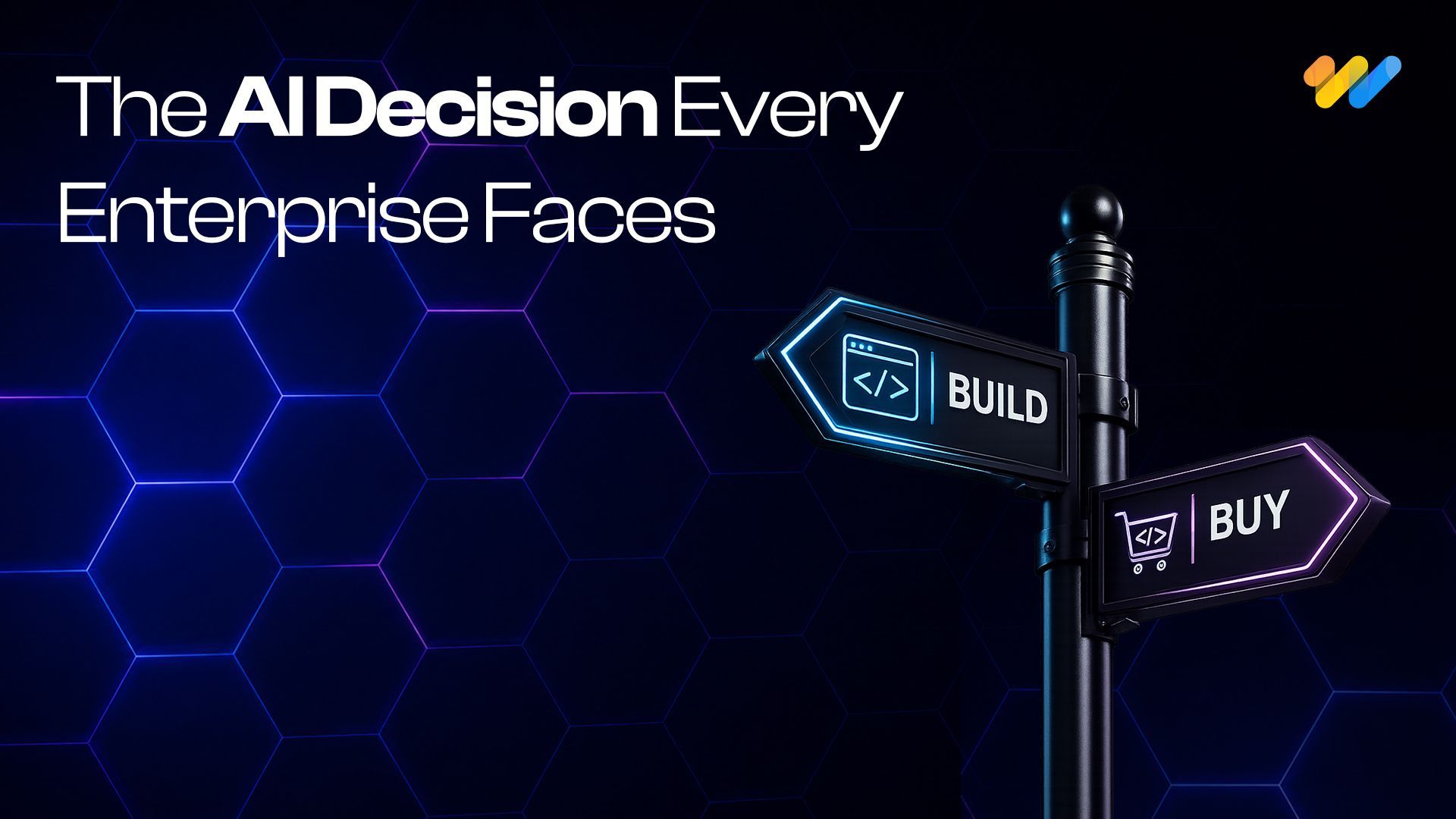
For organizations evaluating broader AI platform decisions, our guide on Build vs Buy: AI Agent Platforms Compared explores the trade-offs between developing in-house capabilities and adopting existing platforms. Today, the conversation has shifted to a far more practical question:

Which Platform strategy will deliver the greatest business value?

With frontier AI models evolving at a rapid pace, corporate leaders are being asked to make decisions that can influence platform architecture, governance frameworks, operating costs and future innovation. OpenAI, Anthropic, Google, Meta, Mistral, DeepSeek and other providers continue to expand their functionality and platform offerings, increasing the complexity of model evaluation.

Enterprise investment in generative AI continues to accelerate, as McKinsey & Company found that 65% of survey respondents reported regularly using generative AI in at least one business function in 2024, nearly double the adoption rate reported the previous year.

Business and technology leaders are increasingly focused on selecting models that align with business needs, governance expectations, integration requirements and long-term technology strategy. Frontier AI models and foundation models are reshaping how enterprises evaluate and deploy AI.

This guide provides a practical, vendor-neutral framework for evaluating frontier AI models. Rather than focusing on benchmarks and feature comparisons alone, it examines the factors that drive successful enterprise adoption, operational readiness and long-term scalability.

Why AI Model Selection Is Becoming a Platform Decision?

Many companies start by comparing model capabilities, benchmarks and pricing. While these factors matter, they represent only one part of the evaluation process.

Corporate AI initiatives must also account for governance requirements, security controls, compliance obligations, integration complexity, operational costs and long-term scalability. The selected model should support the organization's broader AI strategy, technology landscape and future growth objectives. Security should be considered from the outset, particularly as AI moves into production environments.

For a deeper look at one of the most significant enterprise AI risks, see our guide, AI Agent Security: Defending Against Prompt Injection in Enterprise AI Systems.

OpenAI has become the default starting point for many enterprise AI initiatives due to its mature ecosystem, support for compliance policies, alignment with security requirements and ability to integrate with existing workflows. Organizations should also evaluate vendor flexibility, deployment options and platform interoperability alongside model performance.

As AI adoption expands, model selection has become part of a broader AI platform strategy. Enterprises are increasingly building flexible AI platforms that support multiple models, adapt to evolving business requirements and balance performance, governance and operational readiness.

Enterprise Evaluation Criteria
blog-frontier-ai-model-inside1-prod.png

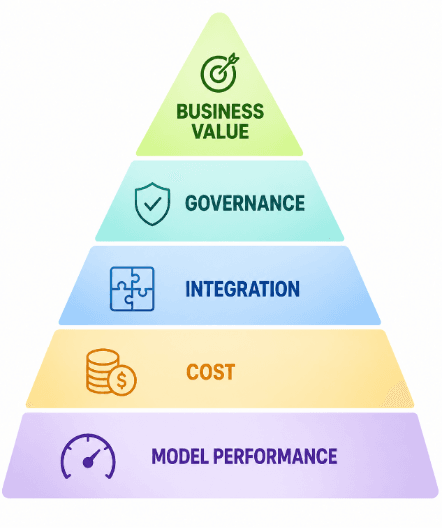
Benchmark rankings and model leaderboards often attract the most attention, but Strategic AI adoption requires a broader evaluation framework. Most modern large language models and foundation models now offer advanced reasoning, coding and multimodal capabilities. Successful AI implementations are often supported by a strong fit between model capabilities, business objectives, operational requirements and governance needs.

1. Reasoning Quality

A model's ability to reason through complex tasks remains one of the most important evaluation criteria. Organizations should assess how effectively a model handles multi-step problem-solving, analytical reasoning, instruction following and decision-support scenarios. Consistency and reliability across real-world business workflows often matter more than isolated benchmark results.

Organizations evaluating reasoning capabilities may also benefit from understanding how agent-based systems coordinate complex tasks.

2. Context Window

Context windows determine how much information a model can process within a single interaction, making them valuable for document-intensive workloads. Many of these workloads also benefit from Retrieval-Augmented Generation (RAG), which improves access to enterprise knowledge while reducing hallucinations. Larger context windows can further reduce reliance on retrieval mechanisms and complex prompt engineering, improving workflow efficiency and user experience.

3. Governance and Compliance

For many organizations, governance considerations can be just as important as model performance. Factors such as auditability, access controls, data handling policies, compliance obligations, security certifications and deployment flexibility should be evaluated early in the selection process to reduce implementation challenges and support successful production adoption.

4. Cost Predictability

Model pricing is only one part of the cost equation. Organizations should also consider broader operational costs associated with AI deployment. These include API usage, infrastructure, governance, integration, monitoring and ongoing support. Understanding the total cost of ownership provides a more accurate picture of long-term investment requirements.

Ultimately, AI evaluations should consider business outcomes, governance requirements, scalability and operational factors alongside model capabilities. Enterprises are often best served by selecting models that align with their business objectives and can be effectively deployed, governed and scaled within their operating environment.

OpenAI vs Claude vs Gemini
blog-frontier-ai-model-inside2-prod.png

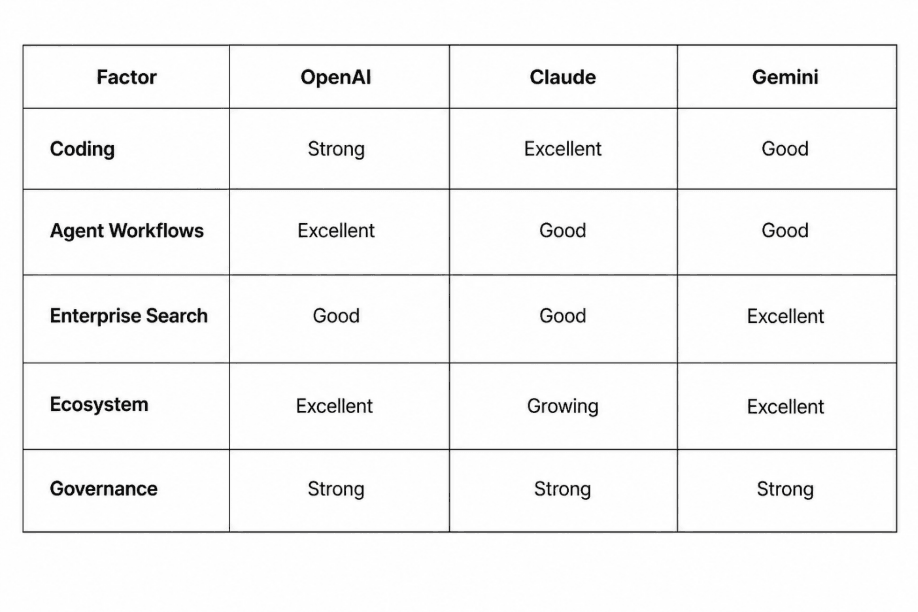
This comparison focuses on three of the most widely adopted frontier AI models in enterprise environments.

1. OpenAI

OpenAI has become a common starting point for enterprise AI initiatives due to its mature developer ecosystem, broad adoption and support for agent-based workflows. Organizations benefit from its integration capabilities, comprehensive tooling and continuous platform enhancements.

OpenAI is widely evaluated for AI assistants, workflow automation, customer service applications and agentic systems that coordinate across multiple tools and business systems. As adoption grows, organizations should also consider usage governance, cost management and long-term model dependency.

2. Anthropic Claude

Claude has established a strong position in coding, document analysis and knowledge-intensive workflows. Its ability to work effectively with large volumes of content makes it particularly attractive for businesses dealing with contracts, policies, technical documentation, research and other document-heavy processes.

Many enterprises evaluate Claude for software engineering support, code review, compliance analysis, knowledge management and research-driven use cases. Companies should also consider factors such as cost, response times, platform maturity and performance requirements when evaluating Claude.

3. Google Gemini

Gemini differentiates itself through multimodal capabilities and deep integration with Google's broader ecosystem. For organizations already invested in Google Cloud and Workspace, Gemini can serve as a natural extension of their existing AI environment. Gemini is widely recognized for its multimodal capabilities across text, image, audio and video inputs.

Common use cases include knowledge retrieval, document intelligence, multimodal analysis, content processing and knowledge discovery. Companies evaluating Gemini should assess how Gemini fits their deployment requirements, governance needs and broader AI strategy.

Evaluating the Right Fit

Each provider brings a different set of strengths to enterprise AI. OpenAI is often associated with agentic workflows and a mature developer ecosystem, Claude with coding and document-intensive use cases and Gemini with multimodal capabilities and knowledge retrieval. The most effective evaluations focus on real business workloads, governance needs, integration complexity and long-term platform goals rather than benchmark performance alone.

Hidden Enterprise Costs

Many enterprises assess frontier AI models primarily on token pricing, but model usage costs represent only part of the total investment required for enterprise AI. Research from Deloitte indicates that organizations are increasingly directing AI budgets toward governance, integration, risk management and operationalization as deployments mature.

Many of the largest costs emerge after platform selection. Common areas of investment include integration, data infrastructure, security and compliance, operational support, user adoption and ongoing model optimization.

Organizations that focus primarily on pricing may underestimate the total cost of ownership and the resources required to deploy and manage AI at scale. Benchmark results can inform model evaluations, but long-term success also depends on governance, integration, operational readiness and scalability.

Key Takeaway: Evaluate AI investments based on business value, governance, operational costs and total cost of ownership, not token pricing alone.

Open-Source vs Closed Models

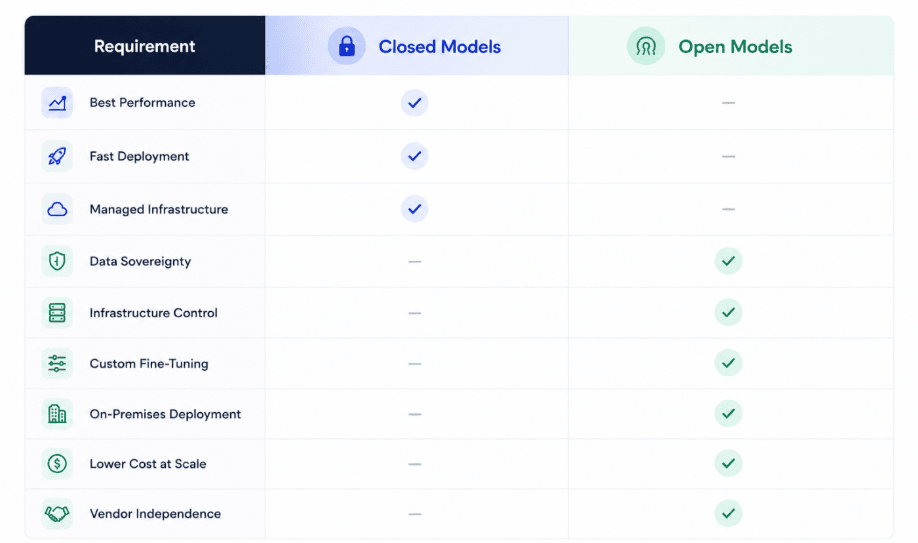
One of the most important decisions facing enterprises is whether to adopt proprietary frontier models or open-weight alternatives. The right choice depends on business objectives, Governance requirements, infrastructure strategy and long-term operating models.
blog-frontier-ai-models-inside3-prod.png

Many enterprises are adopting hybrid AI architectures that combine proprietary frontier models with open-weight alternatives to support diverse workload requirements. Proprietary models are often used for advanced reasoning, agentic workflows and access to the latest capabilities, while open-weight models may be preferred for privacy-sensitive, highly customized, or cost-conscious use cases. This approach enables organizations to balance performance, governance requirements, operational flexibility and cost considerations across their AI landscape.

Why Multi-Platform Architectures Are Winning

A growing number of enterprises are moving beyond single-model strategies. Different models offer distinct strengths and few organizations rely on AI for a single business function. Software development, customer service, knowledge management, document analysis and workflow automation frequently require different capabilities.

As a result, many organizations are adopting model-routing architectures that match workloads to the most appropriate model. This approach enables enterprises to optimize performance, governance, operational flexibility and cost across a diverse set of AI use cases.

This approach offers several practical advantages.

1. Reduced Vendor Dependency

Businesses maintain greater flexibility as model capabilities, pricing and available model options continue to evolve.

2. Cost Optimization

Workloads can be routed to the most appropriate models based on business requirements and cost considerations.

3. Performance Alignment

Different models can be leveraged for the areas where they consistently perform best.

4. Operational Resilience

Enterprises are less exposed to changes, outages, or limitations associated with a single provider.

AI is increasingly being incorporated into enterprise platforms, applications, workflows and operational processes. Multi-platform architectures provide the flexibility to adapt as technologies mature, business priorities evolve and new models enter the market.

Enterprise Procurement Checklist

Selecting a frontier AI model extends beyond technology. Organizations should first define their business outcomes and success criteria, then evaluate how well each model aligns with their data requirements, operating environment and strategic priorities. Organizations should also evaluate expected business outcomes before committing to large-scale AI deployments.

It is equally important to understand how data will be used. Consider whether sensitive information will be processed, which compliance requirements apply and how data residency or governance policies may influence deployment. From a technical perspective, evaluate integration with existing systems, scalability and user performance expectations.

Governance should be considered from the outset. Visibility into model activity, monitoring, security controls and operational oversight becomes increasingly important as AI moves into production.

Finally, look beyond the model itself. Vendor support, roadmap alignment, pricing predictability and platform flexibility all influence long-term success. Addressing these factors early can help organizations move from pilot projects to enterprise-scale adoption with greater confidence.

Final Recommendation Framework

Frontier AI models offer different strengths for different business needs. OpenAI is well suited to agentic workflows and enterprise-scale AI implementations, Claude excels in coding and document-intensive work, Gemini is a strong fit for multimodal and knowledge-intensive workloads and open-weight models are well suited to organizations prioritizing control, customization and data sovereignty.

As AI adoption expands, leading companies are building adaptable AI platforms that support multiple models and evolving business requirements. Platform flexibility remains essential as model capabilities, pricing, governance frameworks and provider offerings continue to evolve.

That's where 12th Wonder helps. We help organizations move beyond model selection to build scalable, governed AI platforms that support AI assistants, workflow automation, knowledge management and multi-model architectures while delivering measurable business value.

Companies creating lasting value from AI are investing in flexible AI platforms that can evolve alongside changing technologies and business priorities.

Frequently Asked Questions

1. What is a frontier AI model?

A frontier AI model is a state-of-the-art general-purpose model that represents the leading edge of AI capabilities in areas such as reasoning, coding, multimodal understanding and tool use.

2. Which frontier AI model is best?

The optimal model depends on business requirements, technical constraints, governance needs and workload characteristics.

3. Should enterprises standardize on one model?

Not necessarily. Many organizations are adopting multi-platform architectures that route workloads to different models based on business requirements, governance needs and cost considerations.

4. Are Open-Weight Models Enterprise-Ready?

Yes. Many enterprises use open-weight models successfully, particularly when data sovereignty, customization, or infrastructure control are important requirements.

5. How should organizations evaluate frontier models?

Companies should assess models using real business workloads while considering governance, compliance, integration requirements and operational costs.

6. What is the biggest mistake enterprises make when selecting AI models?

Many organizations focus on model performance without fully evaluating governance, integration, security and long-term costs.

Request Demo

Build an AI Platform That Scales with Your Business

Build a flexible AI platform that delivers governance and measurable business value.

Recent Blogs

Enterprise AI agent platform comparison illustration — build vs buy decision framework for 2026 with hybrid architecture.

Build vs Buy: AI Agent Platforms Compared (2026)

Enterprise AI has evolved beyond simple chatbots into operational ecosystems capable of workflow automation, system integration, and real-time decision-making

Read more...
Claude Fable 5 illustration, Anthropic's Mythos-class AI model for autonomous workflows and enterprise use

Claude Fable 5: The Mythos-Class AI Model You Can Use in 2026

Anthropic's Claude Fable 5 is the first publicly available Mythos-class AI model, representing a significant step beyond traditional AI assistants.

Read more...
Multi-agent systems blog thumbnail — 2026 enterprise guide to multi-agent AI

Multi-Agent Systems for Business: A Practical Enterprise Guide (2026)

Enterprise AI is quietly moving away from the idea of one system doing everything. The future of enterprise AI is increasingly being shaped by coordinated intelligence

Read more...
AI agent ROI blog thumbnail — how to measure AI value before you build

AI Agent ROI: How to Measure It Before You Build

What was once considered cutting-edge technology reserved for large tech firms has now become part of everyday business operations

Read more...
Blog cover

AI Agent Security: Defending Against Prompt Injection in Enterprise AI Systems

The rate of adoption of autonomous AI agents by businesses is growing quickly. Autonomous AI agents have become commonplace, where they are being used to automate workflows, engage with customers,

Read more...
Blog cover

RAG Explained: The Complete Guide to Retrieval-Augmented Generation for Enterprise AI (2026)

Somewhere in your organization right now, an AI assistant just answered a question with complete confidence and complete inaccuracy. It cited a policy from two years ago, a product that was discontinued last quarter,

Read more...
Blog cover

EU AI Act Compliance Checklist: Everything Enterprises Need to Know Before 2027

AI governance has moved from a boardroom discussion to a legal obligation. The EU AI Act is the most comprehensive artificial intelligence policy framework enacted anywhere in the world and enforcement is already underway.

Read more...
Blog cover

Small Language Models vs LLMs: A Practical Guide to Choosing the Right AI Model for Your Business

The conversation around enterprise AI in 2026 has shifted. While large language models like GPT-4 and Claude still dominate headlines, a quieter revolution is happening at the edge.

Read more...
Blog cover

How to Build an AI Agent for Your Business: A Practical Guide (2026)

AI agents are no longer a future-facing experiment. Businesses across industries are using them to handle real workflows right now, and the

Read more...
Blog cover

AI and the Energy Crisis: How Data Centers Are Reshaping the Global Power Grid in 2026

AI data center energy consumption has become one of the defining infrastructure challenges of this decade. The numbers are no longer abstract.

Read more...
Blog cover

AI in the Supply Chain: Where Value Is Actually Created

AI adoption across supply chains is accelerating. Investment is growing, pilots are expanding, and technical capability is improving quickly.

Read more...
Blog cover

Vibe Coding in 2026: The Complete Guide to AI-Powered Development

Vibe coding is a natural-language-first approach to software development where you describe what you want in plain English and AI generates functional code for you.

Read more...
Blog cover

AI Trends in 2026: 7 Predictions That Will Reshape Every Industry

The most important AI predictions for 2026, agents, generative AI, industry transformation, governance and what's next. A practical guide for business and technology leaders.

Read more...
Blog cover

Real-Time Visibility in Logistics: Why Your Architecture Is Costing You More Than You Think

Here is a number worth pausing on: 45% of logistics organizations have real-time visibility into fewer than half their shipments.

Read more...
Blog cover

Why Field Operations Break When You Can’t See Them on a Map

Field operations rarely fail because teams are not working hard enough. They fail when leaders lose visibility into what is happening, where it is happening, and why.

Read more...
Blog cover

What Your GIS Data Actually Needs for GeoAI

We examined why many GeoAI projects fail before they even get started in the previous blog. Let's now discuss what makes GeoAI function in the real world.

Read more...
Why GeoAI projects fail blog banner — common reasons GeoAI initiatives stall before launch

Why GeoAI Projects Fail Before They Even Start

GeoAI is currently omnipresent. In order to anticipate failures, automate decision-making, and make sense of intricate networks, utilities,

Read more...
GIS drone mapping blog banner — drones powering real-time geospatial intelligence

GIS Drone Mapping: How Drones Are Powering the Next Era of Real-Time Geospatial Intelligence

GIS drone mapping is rapidly transforming how organizations collect, analyze, and act on geospatial data.

Read more...
Blog cover

Digital Twins & 3D GIS Modeling: Global Benefits, Challenges & Solutions

Digital twins and 3D GIS modeling are redefining how organizations plan, operate, and maintain physical asset

Read more...
Blog cover

GeoAI Explained: How Geospatial AI is Solving Real-World Challenges in the U.S.

GeoAI: short for Geospatial Artificial Intelligence is the convergence of geospatial data (location, maps, remote sensing, GPS, GIS systems)

Read more...
Blog cover

The ROI of Implementing a GIS Solution: A Business Case Study Approach

Relying on fragmented data and outdated mapping tools is no longer sustainable for organizations navigating complex,

Read more...
Blog cover

The Telecom Data Migration Imperative: Challenges, Best Practices & Future-Ready Strategies

As telecom networks rapidly evolve from 4G to 5G and legacy OSS/BSS stacks shift

Read more...
Blog cover

Building a Future-Ready Telecom Data Migration Framework: Tools, Automation, and Real-World Lessons

Telecom data migration is not just about moving data it's about ensuring scalability, security,

Read more...
Blog cover

Top 7 Emerging AI Trends to Watch in 2025

Pushing deeper into 2025, artificial intelligence continues to sprint from being a promising tool to

Read more...
Blog cover

Geospatial Revolution: Top 10 Industries Benefiting from GIS

Geographic Information Systems (GIS) have emerged as a powerful tool for businesses and organizations across various sectors.

Read more...
Blog cover

Empowering Smarter Cities: The Role of Geospatial Digital Twins in Urban Planning

Geographic Information Systems (GIS) have emerged as a powerful tool for businesses and organizations across various sectors.

Read more...
Blog cover

Enhancing Customer Experience with Location-Based Services Powered by GIS

Customer experience has emerged as a key differentiator for organizations across industries be it in utilities, retail or public services.

Read more...
Blog cover

Transforming Field Operations with Mobile GIS

Be it in utilities, transportation, or environmental management, field operations are complex and challenging.

Read more...
Blog cover

Emerging trends in GIS: Navigating the geospatial landscape

GIS or Geographical information systems has helped turn maps into advanced tools for problem-solving.

Read more...
Blog cover

How GIS is transforming predictive maintenance in the utility sector

The utility sector is the backbone of the modern economy providing vital services like electricity, water, and gas to people and businesses.

Read more...
Blog cover

Case study spotlight: Streamlining HFC network management with GIS for a US-based Telecom Service Provider

GIS (Geographical Information System) has been crucial to the growth of the telecom sector, providing invaluable geospatial data that benefits even

Read more...
Blog cover

GIS In Action: Real-World Examples of How It's Used

Geographic Information Systems (GIS) have become indispensable tools across a multitude of industries, revolutionizing the way we understand, analyze, and interact with spatial data.

Read more...
Blog cover

Case Study Spotlight: Revolutionizing Utility Asset Management

At 12th Wonder, we are transforming the way utility companies manage their assets. In one of our recent projects, we partnered with a leading utility

Read more...
Blog cover

The Cutting-Edge Benefits of GIS For Telecom Networks

Geographic Information Systems (GIS) are making a big impact in the telecommunications world. Think of GIS as a powerful tool that transforms heaps of data into clear, useful maps.

Read more...
Blog cover

What is Mobile GIS? Here’s what you should know.

The world of Geographic Information Systems (GIS) is changing quickly, and mobile GIS is leading the way. At 12thWonder, we’re using this exciting technology to transform how field data

Read more...
Blog cover

A mix of Introductory and Advanced Geospatial Solutions: 12W's Approach

Geospatial solutions are revolutionizing the way we understand and interact with the space around us. We are at the forefront of this transformative wave, a company that has seamlessly integrated technology

Read more...
Blog cover

The Importance of Data Interoperability in Today’s Geospatial Solutions

Have you ever wondered what makes the digital world tick seamlessly? It’s the magic of data interoperability, especially in the realm of geospatial solutions.

Read more...
Blog cover

Leading Top 10 Best Geospatial Companies

This guide highlights the top 15 GIS (Geographic Information Systems) companies leading the way with their cutting-edge solutions in mapping and spatial analysis.

Read more...
Blog cover

Getting Started in QA Test Automation: Essential Tips for Beginners

Starting on the journey of Quality Assurance (QA) test automation can be both exciting and challenging, especially for companies taking their first steps in this domain.

Read more...
Blog cover

How to Choose the Right QA Services Provider for Your Business: Including a Checklist

In today’s competitive market, software quality assurance (QA) is vital for ensuring robust, reliable, and high-performing software solutions.

Read more...
Blog cover

Solve Your Business Challenges with 12th Wonder's Tailored Digital Transformation Solutions!

Ready to elevate your business with cutting-edge digital solutions? At 12th Wonder we offer a suite of innovative software services. Our goal is to empower your workforce and lead your business towards

Read more...
Blog cover

Integrating QA Test Automation and Manual Testing: A Balanced Approach in Software Development

In software development, you can achieving the highest quality of product by using a strategic blend of both QA test automation and manual testing. While automation is offers speed and repeatability

Read more...
Blog cover

5 Ways QA Automation Can Transform Your Business

Staying ahead of the competition requires including innovative approaches to improve efficiency and quality. This is where QA automation comes into play.

Read more...
Blog cover

Dictionary of GIS Terms

Aerial Photography Mapping: The creation of maps based on the interpretation and analysis of aerial photographs, utilizing differences in vantage points and angles to construct detailed

Read more...
Blog cover

Leading Top 15 Best Software Testing & Quality Assurance Global Companies

This guide highlights the top 15 software testing companies that consistently deliver high value from small, mighty teams. It emphasizes the critical role of QA testing in ensuring software quality

Read more...
Blog cover

Maximizing Business Value: The Transformative Power of Automation in Quality Assurance Services

The integration of automation in Quality Assurance (QA) services has transformed industries by enhancing efficiency, accuracy, and cost-effectiveness.

Read more...
Blog cover

Navigating the Pitfalls of Application Development: How We Ensure a Smooth Journey

The process of application development can be both exciting and daunting. From the spark of an idea to the polished end product, there are numerous stages where errors might occur.

Read more...
Blog cover

Quality Assurance Redefined: Your Path to Success with 12thWonder

Are you ready for help with ensuring the highest quality for your products? Collaborating with 12thWonder for Quality Assurance (QA) services opens the door to a transformative experience that

Read more...
Blog cover

Streamline Your Testing Process with 12th Wonder's Test Automation Services

In this ever-evolving world of software development, where changes happen at the drop of a hat, ensuring quality, speed, and reliability is absolutely essential.

Read more...
Blog cover

7 Ways QA Services Can Reduce Costs in Software Development

In today’s fast-paced world of software development, your company faces a myriad of challenges. Balancing quality and cost-effectiveness is a perpetual struggle.

Read more...